


Just an application a day…


Keeps the flashes at bay???
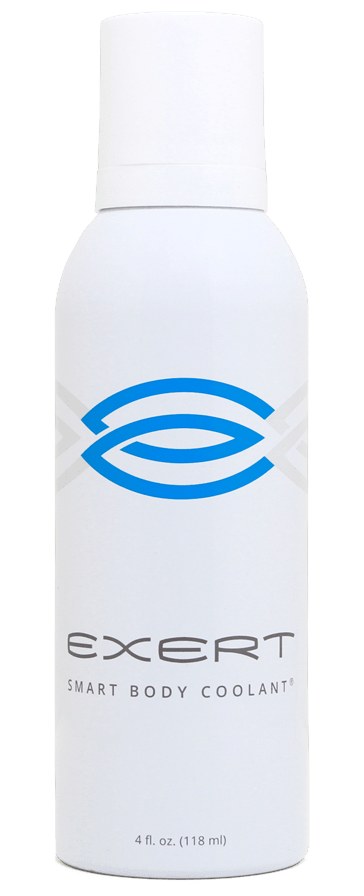
When the folks at Exert contacted me on Twitter about their Smart Body Coolant, I wanted to believe, I truly did. However, what I’ve found after a week’s use is that the product simply does not live up to its claims, at least, not for me.
Exert’s Smart Body Coolant is a once-daily body spray composed of phase change and high thermal conductivity materials. Theoretically, it promises to draw heat away from the body much like a wicking fabric, reducing temperature by as much as 2 to 6 degrees. And there’s no need for additional application after a flash; it supposedly ‘recharges’ once the skin drops to optimal temperature.
Admittedly, I have been experiencing lots of undesired heat of late, both during the night and while at the gym and so, another alternative to HRT certainly appeals. But, Exert did nothing for me. Further intrigued by its lack of effectiveness, I delved deeper into its ingredients. Here’s what I learned:
- A phase-change material (PCM) is a substance with a high heat fusion that absorbs or releases energy or heat, when the material changes from solid to liquid. So, when you start sweating, it should be working to release the heat.
- Thermal conductivity refers to how well certain materials transfer heat
- Together, these should equate to cooling.
Except, they don’t.
Look, Exert is well priced and should last up to six weeks with daily application. The application part of this equation lives up to its promises: nongreasy, unscented and non-staining. And, while I remain skeptical about its effectiveness, others’ testimonials are not quite so negative so clearly, there is either a placebo effect at play or it’s working for some. My advice? I don’t believe the hype but at the same time, it’s always worth trying, right? Kudos to the company for a unique idea but spraying flashes away is not in my future. Is it in yours’?
[Disclosure – I was not paid for this review but I did receive a can of Exert care of the company’s representatives.]
Read MoreWednesday Bubble: Time for some scuba gear!

Readers:
I am on holiday through Labor Day so today, I leave you with a link to the archives; the topic is night sweats!
Hopefully, you’ll find some gems and your partner can lose his scuba gear!
Cheers!
Read MoreFit to be tied: MsFLASH and exercise
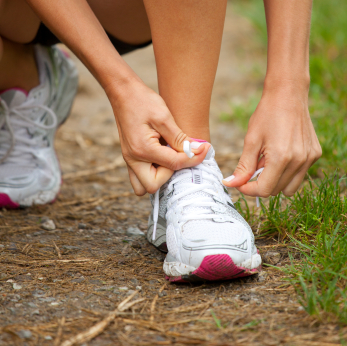
Exercise. Does it or doesn’t it? That is, does exercise improve menopausal symptoms? Some studies have shown that it does; and others, like the one I am about to share, shows that it does not.
I am fit to be tied, literally.
Not angry or annoyed but rather, regardless if exercise can improve vasomotor symptoms or not, there is absolutely no doubt that it helps maintain weight, improves overall wellbeing, promotes healthy bones, and may even result in better sleep in midlife. On Wednesday’s post, I shared information about a series of studies called MsFLASH, studies geared towards identifying strategies to alleviate menopausal symptoms and overall health. Today, I ran across one of these trials, published online in Menopause, the goal of which was to clarify the impact of three times weekly aerobic training in women who were in late perimenopause or full menopause reporting frequent and bothersome hot flashes and night sweats.
Exercise/aerobic training can mean a lot 0f things. This time, women who were randomized to 12 weeks of exercise participated in trainer supervised conditioning comprising a treadmill, elliptical or stationary bike for 40 t0 60 minutes each session, with the goal of reaching up to 60% of target heart rate for the first month and up to 70% thereafter (this, along with workload and perceived exertion was measured throughout each session). Likewise, the women had energy expenditure goals relative to their body weight. The other group of women were asked to maintain their usual activity levels but at the end of the study, were offered a one month gym membership or yoga sessions.
While the verdict wasn’t so great for reduction of the frequency and bother of daily hot flashes (both study groups reported declines in hot flash frequency by roughly 2.5% and bother only changed minimally), adhering to training sessions appeared to favourably move the needle for sleep quality and quantity and yielded small improvements in depressive symptoms. Another interesting finding was that race appeared to play a role. Data have shown that African American women actually experience more severe hot flashes than their white peers. And, in this study, while exercise had some impact, albeit minimal, on hot flashes and night sweats, this impact was only seen among white women.
Still unanswered are whether or not small bouts of exercise can positively impact vasomotor symptoms or if individual differences (such as the one that race provides) also play a role. While these questions are being pondered, I’ll leave you where I started: exercise and menopause? Fit to be tied. Don’t give up the activity; it may not help your flashes but it yield a whole lot of benefits beyond cooling the heat that ails.
Read More
Household work..the key to better sleep?
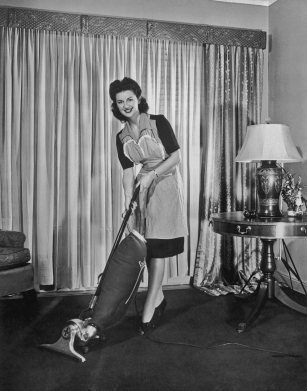 Have I got your attention yet?!
It’s no surprise that hot flashes and night sweats rank among the most important factors when it comes to poor sleep. However. less clear are the factors that may provide a buffer against the flashes. And aside from the usual suspects e.g., crankiness and moodiness or the inability to focus, poor sleep has been linked to heart disease and obesity, among other less desirable health conditions.
So, what can you do?
I’ve written about the benefits of physical activity and amelioration of menopausal symptoms many times on Flashfree. And, I imagine I will continue to do so. But what about sleep? There is evidence that physical activity can help bolster both sleep quality and sleep quantity. Yet, few people have examined the domino effect, i.e. fewer hot flashes ← physical activity → better sleep. Moreover, even fewer have considered the benefits of non-leisure physical activity, like housework.
Now, before you accuse me of setting women back 60 or 70 years, let’s consider exactly what I am suggesting.
According to research, women participate in less leisure time physical activity but greater levels of household physical activity than their male peers. This is apparently truer among ethnicities other than Caucasian (especially African American), who also tend to have greater levels of obesity and poorer sleep characteristics. So, it would follow that by increasing both, women might fare better in the sleep department, right?
In fact, when researchers took a small group of women participating in the larger SWAN study and evaluated their self-reported and scientifically measured sleep patterns for four nights, that is exactly what they found. The group, which was comprised of both White and African-American women, reported having flashes or sweats, were between the ages of 54 and 63, had an intact uterus and were not on medications that could affect hormone levels or symptoms. And while the number of women was quite small (only 52), they fit into the full spectrum of BMI targets (from normal to obese to overweight). In addition to sleep patterns, they also shared details of their most common daily physical activity (how often, how long and how intense) and household/caregiving responsibilities (time spent caregiving, preparing/cleaning up after meals, and routine chores as well the intensity of these activities).
Not surprisingly, women who had greater levels of leisure physical activity were 8 times more likely to report that their sleep quality was better than their less active peers. And, women who reported greater household, non-leisure physical activity awakened fewer times during the night, but only if their BMI levels were lower. Yet, the benefits were mostly seen more among White women. Even more troubling is that the researchers say that they could not determine the ‘why’ of these findings, even though they conducted several different types of analyses and comparisons.
The good news is that for some women, engaging in greater levels of household physical activity and leisure physical may reduce sleep disturbances, especially if they are not overweight. For others, especially my African-American sisters, the mystery remains. African-American women often report more severe hot flashes than their White peers. And while experts have pointed fingers towards rates of obesity or distinctions in estrogen levels or smoking history, the reasons remain unclear.
Meanwhile, while I am not necessarily suggesting that you increase your household responsibilities, I do believe that even with the limitations of this study, more physical activity may beget better sleep and possibly fewer or less severe hot flashes. Finally? Can we please find some effective and viable strategies for women of colour? Although the menopause experience may vary by ethnicity, as women, we need to find solutions that work for most of us, not some of us.
Read MoreWednesday Bubble: Are you resilient? Or vulnerable?
 Hot flashes and night sweats. Why is it that some women seem more prone to one or both and others simply sail through menopause with flying colours, that is, why are some women resilient to symptoms and others vulnerable? Are genetics or race or psychosocial factors at play? Moreover, are there ways to predict which camp you fall into before you start menopause so that you can employ preventive measures or mentally prepare for what may come?
By examining information collected on over 4,000 women across the UK, researchers believe that they may have found a few answers to why some women do and some don’t. Here’s the lowdown:
Researchers first grouped 23 menopausal symptoms into six unique clusters, psychological, sexual, general, musculoskeletal, menstrual and bloating. They then further divided them by frequency and severity. The results?
Resilience to hot flashes appeared to be bolstered by having experienced less bother during menstrual periods, having fewer general symptoms (such as breathlessness, a frequent need to urinate, headaches or dizziness) and the perception that menopause and its symptoms did not have a significant consequence on one’s life.
Conversely, vulnerability to hot flashes appeared to be related to having one or more children, having a higher (>25) BMI, experiencing night sweats and the perception that menopause and its symptoms had a moderate to highly significant life impact.
How’s your physical health? Evidently the worse it is, the more vulnerable you are to night sweats. If you have hot flashes, you may also be more vulnerable; accompanying muscle and joint aches So does having sleep difficulties or a perception that menopause has a significant impact on your life. Women who are resilient to night sweats don’t smoke, tend to rely on psychological strategies to help manage their symptoms and like their hot flash counterparts, don’t perceive menopause as having a significant impact on their lives.
If you are wondering why any of this is important or relevant, just think about it: having a greater perception that menopause has a negative overall impact on one’s life can impact resilience or vulnerability to some of its most troublesome symptoms: hot flashes and night sweats. This suggests that behavioral or psychological interventions, seeking social support or simply learning more about the ‘pause may potentially impact how bad (or good) it ultimately is. Moreover, clusters of these factors appeared to have a greater or lesser impact, which truly challenges the ‘one size fits all’ model of treatment.
Menopause and (and how we go through it) isn’t always our choice. But isn’t it refreshing to know that there are aspects about the ‘pause that ARE in your control? Stop smoking if you are a current smoker. Think about how you allowing aging to impact how you perceive your life and if there are steps that you can take to do a 180 attitude adjustment. Try to shed a few pounds if you can. And if you are in the premenopausal phase, take some steps now to shift the ‘tude when your period hits.
Resilient or vulnerable? It may be up to you, at least in part.
Read More
Archives
Tags

This work is licensed under a Creative Commons Attribution-NonCommercial-NoDerivs 3.0 Unported License.