


Guyside: Getting testy about testosterone


 There’s no doubt that men think about the effects of aging on their bodies. And if there were, a viewing of ads for hair colouring, hair thickening agents, or erectile dysfunction drugs would quickly convince you. You could be a new man!
And as regular Flashfree readers will know, one of the things that’s been touted as a solution to the woes of the aging male is testosterone replacement therapy.
The basic idea is that men may have a condition that’s referred to as “Low T.” And so a gel, a patch, a tablet or an injection may bring you back to a more energetic, athletic, virile condition. The pitch has been made more and more convincingly, by all accounts: an Australian research team found that the sales of testsosterone treatments went from $150 million in 2001 to $1.8 billion in 2012.
That’s a 1200% increase. The Australian research indicated that the amount of testosterone being prescribed far outstripped the incidence of “male menopause” or andropause. So what’s going on? Oh, I suspect there’s a generous helping of vanity involved here.
But if it were simply a matter of making men feel better about themselves, it would just be a waste of money. A growing body of research evidence is suggesting that treating Low T may increase the risk of cardiac events. The most recent, an article from the open-access journal PLOS ONE, suggests a substantial increase in the risk of myocardial infarction — what we normally refer to as a heart attack — with the use of testosterone, for men under and over 65 years of age.
I’m sure there are men with diagnostic criteria that would make testosterone therapy an appropriate choice, with a careful calculation of the risks and benefits. But if my hair’s getting a little thin, if I’m not feeling as “macho” as I once was — do I really want to be using a hormone supplement that could put me at risk of a heart attack?
It’s very easy to succumb to marketing-based pitches that appeal to what we think we need as men. But it’s important for us to not jump at those pitches without thinking about the risks and the benefits carefully.
There was a rush to use estrogen and progesterone to help women with symptoms of menopause several years ago, and then a panic when those therapies were associated with increased cardiac symptoms.
I’m no doctor, and I’m certainly not saying that nobody should be using hormones in this way. But I do think that we should think through ALL of our medical decisions and ensure we’re taking the risks seriously.
(photo: CC-licenced image by Flickr user Ed Schipul)
Read MoreGot menobrain?

Boy, oh boy, I sure do. Forgetful, unfocused, downright ditzy. Will an extra boost of estrogen help? Not according to newly published data in the Proceedings of the National Academy of Sciences. In fact, researchers are now starting to dispute the link between declining levels of estrogen and cognition. And this, my dear friends, blows the lid off the roof when it comes to HRT and its use in boosting our thinking.
In this study, researchers tested 643 women — roughly half of whom started menopause within six years and the others, who were more than ten years into menopause. They also measured hormone levels, i.e. estradiol (naturally circulating estrogen), progesterone, testosterone and a hormone that binds specifically to so-called sex hormones. And, when they conducted analyses for each hormone separately, they found no link between declines in levels of estradiol and cognition in either group. Nevertheless, levels of progesterone were associated with better verbal memory and overall cognition in the women who were six years into the ‘pause.
So, what’s it all about? First of all, years into menopause (which equates to years of estrogen decline) do not appear to make a difference in mental focus. Moreover, it appears that if you are heading toward the HRT train to improve your memory and sharpen your thinking, you may want to hop off the next stop before you run the risk of developing serious diseases; the bottom line is that HRT is not the panacea for sharpening thinking and lessening the hazy menobrain. Additionally, a topical progesterone cream might be just the ticket to a thinking cap that doesn’t slip off over time.
Mind you, this doesn’t mean that estrogen has no effect on the brain whatsoever; that information should be filed under ‘TBD.’ But, if you are thinking HRT and preservation of your precious thinking cap, you may want to think again.
Read More
Newsflash: HRT, a “complex pattern of risks and benefits”

I’m not sure if you saw the headlines yesterday in light of news on the government shutdown but the healthwebz are buzzing about a study published in published in JAMA evaluating outcomes in the now infamous Women’s Health Initiative and the utilization of hormone replacement therapy (HRT) for menopausal symptoms. My only question is why do we keep beating this dead horse?
However, I would be remiss if I did not share the highlights of this latest analysis. So here’s what you need to know and honestly, it’s not very different than the stance of other organizations:
- The study or analysis, if you will, provides a detailed overview of the findings from both the original and extension trials of the WHI, looking at both combination and estrogen alone hormone therapy.
- Overall, the risks of combination therapy appear to have outweighed the benefits during the trial. During the extension period, the risk for heart disease remained elevated, a reduced risk for endometrial cancer was seen. Among women who had had hysterectomies before taking HRT, a more balanced risk/benefit equation was seen.
- With regard to breast cancer, the risks of taking combination therapy versus estrogen alone are not equal; more women have adverse effects from combination therapy.
- Proponents of HRT have long argued that age matters. The researchers involved in this analysis state that age influences the effects of hormone therapy ‘in some cases’ as does time since menopause onset, and that results appear to be better for younger versus older women, at least in terms of overall death rates due to all causes, deaths due to heart attack and deaths due to cancer.
- HRT appears to have a more harmful effect on coronary heart disease when used in older women; the effect on younger women is unclear. They say that further research is needed.
- Less clear is the link to breast cancer. While the researchers acknowledge that combined hormones may increase breast cancer incidence and cancer is diagnosed at a later stage, the risk might decline once HRT is stopped. They hypothesize that the progestin component is at play but say that more research is needed.
- While combined HRT may reduce endometrial cancer, it might also increase ovarian cancer risk, as may estrogen alone.
- Combined HRT has been shown to increase deaths from lung cancer, although neither combined or single hormone therapy appears to influence the total incidence of the cancer.
- With regard to diabetes, clot risk, gall bladder disease and dementia? A decrease in diabetes risk during treatment disappears overtime and the risk for clotting and gallbladder disease as well as dementia increase.
The researchers write that the overall findings do not support the use of either combination therapy or estrogen alone for chronic disease prevention, even in younger women. And they note that the risks of combination HRT outweigh the benefits, irrespective of a woman’s age.
Look, I don’t need to cover any additional findings or conclusions. Combination HRT is not all it’s cracked up to be. Speak to your doctor. Analyze your risks and determine if a fewer hot flashes or mood swings are worth it. Only you can decide. Me? I’m sticking with the devil I know and like: alternative strategies.
Read More
Wednesday Bubble: HRT. One Size Does Not Fit All

When it comes to medical strategies, one size never fits all. Dosages and directions for use need to be individualized. Genetic factors, current health status, age, diet, exercise and weight play important roles. As do total health outcomes.
Earlier today, I was reading an article* for a project that I am working on and ran across the following sentence:
“Clinicians are interested not only in improving symptoms, but also in total outcomes, i.e. changes in patients’ current and future health due to effects of treatment.” The author, Dr. Michael Blaiss, goes on to explain that not only is the clinical response important, but also, quality of life and cost should be taken into consideration.”
I can think of nowhere where this statement is more important than in the treatment of menopausal symptoms. One size, indeed, does not fit all. Therapeutic strategies should be individualized and address a woman’s specific symptoms, her age, her current menopausal status, smoking history, health history, diet, genetics and preferences. A single tablet is no more the answer than a standardized dose of hormone replacement therapy (or menopausal replacement therapy — MHT — as it is called in other developed nations).
Recently, a group of organizations** devoted to menopause, reproductive medicine and endocrinology convened to issue a new statement about the use of hormonal therapy during menopause. To be entirely honest, this is the first time that I’ve believed such a statement is without bias and was not driven by pharmaceutical interests. It also appears to reflect the total outcomes concept. And so, I wanted to share a summary of a few key recommendations so that you can make an informed decision about addressing your menopausal symptoms.
- Menopausal Hormone Therapy or MHT is [one] of the most effective treatments for vasomotor symptoms but benefits are likely to outweigh risks [only] before age 60 or within 10 years after menopause. It is also effective for prevention of osteoporosis-related fractures in at risk women but again, only before age 60 or within 10 years after menopause.
- While estrogen alone may decrease the risk of heart disease and death from heart disease in women under age 60 (again within 10 years of menopause), similar evidence for combined hormone replacement in terms of heart disease has been found. It neither prevents or increases the risk of heart disease.
- Vaginal dryness? Try local estrogen and not systemic; it is preferred.
- The risk of stroke increases with MHT; patches may offer lower risk.
Contrary to widespread data, the organizations continue to dispute the connection between breast cancer and MHT, however, they do emphasize that current safety data do not support the use of MHT in breast cancer survivors. Finally? the consensus statement emphasizes that the decision to use MHT is complex and must take certain factors into account, factors such as quality of life, health priorities and personal risk factors. Dose and duration must also be individualized, consistent with goals, and in consideration of safety issues.
If you want to learn more about HRT and its risks/alternatives, I’ve been writing about the issue and the data for almost five years now. You can start perusing the archive of information here. Meanwhile, be smart, be vigilant, ask questions. Don’t accept the idea that a pill or a single solution exists; it probably doesn’t. And mostly? Keep the faith. I’ve got your back. Promise.
*Blaiss MS. Cognitive, social and economic costs of allergic rhinitis. Allergy and Asthma Proc. 2000;21:7-13.
** The American Society for Reproductive Medicine, The Asia Pacific Menopause Federation, The Endocrine Society, The European Menopause and Andropause Society, the International Menopause Society, the International Osteoporosis Foundation and the North American Menopause Society.
Read MoreMore on HRT and your gut
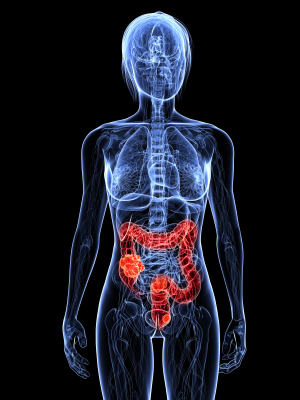
Back in April, I shared news that researchers would be reporting a strong link between ulcerative colitis and hormone therapy at an upcoming American Gastroenterology Association meeting. That study has now appeared online in Gastroenterology journal so I thought I’d fill in a few blanks.
Ulcerative colitis refers to chronic inflammation of the lining of the colon, leading to crampy abdominal pain, diarrhea and general discomfort. Although it is a form of what doctors refer to as inflammatory bowel disease and is very similar to Crohn’s Disease, it only affects the lining of the colon. I am quite familiar with colitis as a close family member suffers from it and I can assure you that it’s no picnic. In addition to genetics, risk factors include smoking, environment and the use of NSAIDs. And it can be exacerbated by stress, low levels of antioxidants and even milk consumption. It also appears more often in Caucasian whites and slightly more women than men.
Importantly, previous studies have demonstrated an association between oral contraceptive use and risk of ulcerative colitis in premenopausal women, although data are pretty scarse in the older age group who are in menopause. Yet, there appears to be some sort of impact of exogenous estrogen, i.e. not manufactured in the body but taken adjunctively, in that it may modify genes that protect the colon from bacteria and toxins as they pass through the GI tract, thereby exposing women who take them to increased risk.
This has been borne out by data culled from over 108,000 women participating in the Nurses Health Study, one of the largest ongoing research initiatives focusing solely on factors that influence and impact women’s health. After ruling out factors that might influence findings, such as age, smoking and body-mass index, as well as prior oral contraceptive use, the researchers learned that women who had used HRT had a significant risk for developing ulcerative colitis compared to women who had never used HRT. Current users had a greater risk than past users. Moreover, risk increased with longer use of hormones and declined as over time after stopping HRT. It did not appear to matter if hormone therapy was combination estrogen/progestin or estrogen alone.
The researchers write that their findings should be used primarily to provide insight into the possible ways the ulcerative colitis develops. However, even if it is clear that there are many other reasons why women should carefully weigh the risk versus benefit ratio with HRT used, I still maintain that this particular association is as important as others.
In the four and a half years that I have been writing about menopause, HRT has been linked to breast cancer, deaths from lung cancer, ovarian cancer, heart disease, stroke, gallbladder disease and now, ulcerative colitis.
Do the math.
Read More
Archives
Tags

This work is licensed under a Creative Commons Attribution-NonCommercial-NoDerivs 3.0 Unported License.