


Wednesday Bubble: PMS and the ‘pause


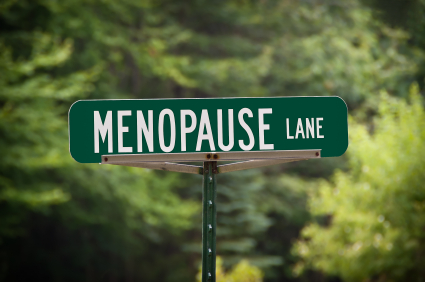
Hey all you perimenopausal women! Have you been taking a familiar walk of late? If you are anything like me, wondering how the walk down (Peri)Menopause Lane has turned out to be an PMS nightmare of epic proportions, take some comfort in knowing that you are not alone. In fact, while I remained convince most of my life that PMS would disappear as my menstrual cycle went awry, it’s been anything but. If possible, it’s worse than ever.
Turns out that a primary culprit may be exogenous (outside or external) progestogen, the type found in hormone replacement therapy (HRT) or oral contraceptives. PMS symptoms — depression, anxiety, mood swing, anger, lethargy, bloating, weight gain, headache or joint or breast tenderness — tend to flare during the luteal phase of the menstrual cycle, that is, before ovulation. And women who are subject to PMS during this time are believed to have a heightened sensitivity to the increase in progesterone levels (even if levels are lower in relation to estrogen during perimenopause) as well as malfunctioning neurotransmitters that cause the central nervous system to go a bit haywire. Add outside sources of progesterone and you’ve got a veritable pot of angst ready to boil over at a moment’s notice.
But what if you are not taking exogenous progesterone? Well, you still may have a heightened sensitivity to the increase in progesterone levels that occur post-ovulation. For perimenopausal women in particular, experts recommend stopping smoking and trying to maintain a healthy weight, especially if your practitioner recommends the addition of estrogen. In a related editorial, there is also a reference to a fruit extract known as Chasteberry (Vitex agnus castus) which was shown to control irritability and mood swings in a scientifically-sound, placebo-controlled trial.
If you prefer to go the pharmacology route and don’t want to take hormones, there has been some work done that shows that SSRI antidepressants (in much lower doses than those used for depression) can be useful in PMS (but of course, can subject women to certain side effets, such as tummy woes, insomnia, headache; these can be better avoided through cyclical use). The last resort? Hysterectomy, at least according to experts (rather extreme, don’t you think?). Mostly though, consider other options – exercise or vitamin B6 also have some clinical evidence to back their use. Finally? Before you take that walk down Menopause Lane, take a breath. Chances are that the worst of it will be behind you before you know it.
Read MoreMenopausal Symptoms? It’s Elementary!

Can you predict what perimenopause may be like? Believe it or not, it appears that certain past events throughout a woman’s reproductive life have more value than meets the eye. In fact, using questionnaire data collected from 290 peri- and postmenopausal women, researchers believe that they have found certain clues. For example, women who reported more severe physical symptoms during perimenopause experienced more severe physical symptoms during other times that their hormones were fluctuating:
- just before their menstrual period
- during pregnancy
- directly after giving birth
- during oral contraceptive use
The best predictors of menopausal pain and discomfort — achy muscles or joints, neck or head pain, lack of stamina, fatigue, low back ache, lack of concentration, bloating? The PMS experience! PMS with pain, lack of concentration and bloating appear to be the linked to the worst physical symptoms around the menopausal transition. And what about hot flashes and night sweats? It appears that most PMS symptoms (e.g. water retention, negative mood, concentration, cramps), fatigue, heartburn, headaches, backaches and hemorroids during the postpartum period, and physical effects of oral contraceptive use (e.g.headaches, bloating, tender breasts, nausea, aches, pains, cramps) are a harbinger of the worst vasomotor symptoms during perimenopause.
It’s important to keep in mind that other factors come into play during menopause, such as overall health, stress and attitudes towards aging. And as I’ve written time and again, all of these factors can influence the menopause experience. Past reproductive experience appears to account for up to 40% of how badly perimenopause may play out. Meanwhile, think back on your reproductive history. And start preparing now to deal with bothersome symptoms as they arise. It really is elementary!
(This study appears in the online edition of Menopause.)
Read More
Menopause: the symptom? Or, the disease?
A few years ago, I ran across the following story on the BBC:
“Woman’s Death Blamed on Menopause.”
“A woman who refused to take hormone replacement therapy died while suffering a menopausal episode, an inquest had heard. Margaret Drew…was killed when she walked out of her family home on to a nearby railway line and was hit by a train…There is no trigger to this at all, except hormones making her do things that she normally wouldn’t do, Dr. Carlyon [Cornwall Coroner) concluded…”
Menopause. The silent killer. Oh really? Drew’s husband claims that his wife was “delightful, lovely and friendly” 99% of the time; the other 1% she’d become “totally irrational.” Yet, she refused to try HRT, he says. On the day of her suicide, he said that his wife was “clearly angry about something.”
Something.
Obviously, the conclusion is that that the “something” is hormones. This reminds me of vintage advertising copy that conveys the simple message that a pill a day can cure all that ails, wipe away the tears, mood swings and instability so that women can “transition without tears” (or better yet, without killing themselves).
Notably, a search in the National Library of Medicine’s PubMed database turned up only one recent study specifically dealing with suicide ideation across reproductive stages. In it, researchers compared data in 8,794 women, and found an increased risk of thinking about suicide among women during perimenopause, not before or after entering menopause. These findings remained after controlling for risk factors such as anxiety and mood disorders. HOWEVER, the researchers noted that the study design did not allow them to form any definitive conclusions about the specific reasons for thinking about suicide.
Another search yielded information that the risk for a major depression increases during perimenopause, primarily as the direct result of vasomotor symptoms. The same does not hold true for women before menopause begins or once they enter menopause. Note that while major depression is a risk factor for suicide, not everyone who is depressed will actually kill themselves.
So, are hormonal fluctuations the sole cause of such deep unhappiness that women want to kill themselves?
Interestingly, just a week after the menopause/train suicide story hit the interwebz, a rather controversial set of data also emerged: since 1972, women’s overall level of happiness has dropped. These findings held true regardless of child status, marital status and age. Researcher Marcus Buckingham, writing in the Huffington Post, said that women are not more unhappy than men because of gender stereotyping and related attitudes, due to working longer hours or because of the inequality of housework/responsibilities at home, but rather, the hormonal fluctuations of menopause may be to blame. What’s more, he leaves us hanging so we’ll tune in for part two of the piece to learn the true cause of our declining happiness or better yet, read his book (which evidently guides women through the process of finding the true role that they were meant to play in life).
Importantly, reactions to this study (and various pundits’ assessment of it) have been mixed. One of the most poignant comments I’ve read asks the question “how is happiness measured? What does it mean?”
I have no idea what caused Mrs. Drew to walk into a train and kill herself. Perhaps she was depressed. Clearly she was suicidal.
I have no idea why research shows that women are less happier than they were three decades ago.
However, is menopause the cause? Aren’t these conclusions an example of how the Menopause Industrial Complex perpetuates societal myths that menopause is a disease that requires treatment? That as women, our attitudes, belief systems and actions are hormonally-based and driven? That we are hysterical beings who need guidance on how to find our way and fulfill our dreams, realize our paths, but only if we calm down?
Feeling angry? Blame it on menopause. Unhappy? Blame it on menopause. Not realizing your dreams? Blame it on menopause. Overworked, overstressed, undervalued? Blame it on menopause.
Blame it on menopause.
I don’t know about you but I’m tired, tired of hearing that menopause is not the symptom but the disease. Isn’t it time we start fighting back?
Read MoreFlashfree – End the “shhh” and embrace the conversation
I am discovering a pattern: when women learn about Flashfree, they inevitably tell me that they wish that they had a sounding board, someone to talk to about the aging-symptom paradigm, more exchange, more discourse. When I started this blog four years ago, I wanted to become a conduit for that conversation or at the very least, an inspiration. And I know that I’ve been inspired by the interest and the support.
Lately, it’s become so apparent that we need to talk more, listen more, explore more. We need each other.
The following was written during the early days of Flashfree and it’s as relevant now as it was then. So, in a bold move, I am reprising it, in hopes that it will begin that spark that I would like to see carry us through the rest of this year. It’s been a challenging one for many of us. And every day becomes a reminder of what’s most important and what is really not so important. Mostly though? I hope that this space continues to be as much yours’ as mine.

I was talking to a colleague/old friend the other day about this blog. She is a few years older than I and we got into this great conversation about generational gaps when it comes to discussing health issues. Perimenopause and menopause in particular have been huge taboo issues for women for decades.
Take for example, an episode from ‘That 70s Show,’ in which Kitty learns that she is not pregnant but rather, has entered menopause. When she asks her mother (played to a T by none other than Betty White) about her experience, she’s informed that she never went through menopause and has always been “healthy.” It’s funny and sad simultaneously. And definitely well worth the watch. (Fast forward to timecode 3:59.)
As the last of the baby boomers enter middle age, their appetites for health information appear to be ever more insatiable. And yet, some of the savviest and most practical women I know confess that they rarely, if ever, discuss their symptoms, moods or concerns about the changes that they are going through with their friends, let alone their mothers.
I’m fortunate. I have a mother who is pretty open about these sort of topics. And although she’s 70+, she tries hard to maintain an open attitude about certain things. When I approached her a few months ago about what I was going through, she was very forthcoming about her own experiences. And while her experiences were not exactly like mine (let’s face it; no two women’s experiences will ever be exactly the same), being able to talk about it was very liberating, even if I didn’t find “why” behind my own symptomatology.
Janine O’Leary Cobb, a former professor at Vanier College in Montreal, author of Understanding Menopause and founder of ‘A Friend Indeed,” once said that “it seem[s] to be one of the last things women talk about because it’s so entangled with aging and we don’t want to talk about getting older.”
And yet, research suggests that when we do talk about “it” and about getting older, hopefulness and positivity dominates, even as we acknowledge the more negative, i.e. loss and bodily changes, at the same time. And there a majority of women in this study who said that they feel a greater willingness to embrace personal growth and opportunities being presented to them with ease and sense of self as they age, a liberation, if you will.
So, what’s my point? Well, I’m not suggesting that we embrace the sugar-coated version of perimenopause and menopause that many advertisers would lead us to believe. But if we start having conversations with our gal pals and our mothers and colleagues, well, maybe we can begin moving towards removing the stigma that surrounds the “change” and aging once and for all.
Knowledge and exchange are certainly positive, powerful aphrodisiacs for growth.
Looking through the window: depression and menopause

There’s a new term that’s being kicked around in medical circles: ‘windows of vulnerability.’
It appears that a growing body of evidence supports the fact that during times of hormonal flux or reproductive cycle “events,” women become increasingly vulnerable to mood swings, anxiety and depression. And while this is certainly not news for many women, it still requires some attention because among the many windows that women may go through, the menopausal transition is evidently one of the most complex. The reason? This is a time when hormones interact with aging, sexuality, life stressors, self-esteem and general health issues.
The subject of depression and menopause is not new to this blog, nor are statistics suggesting that as many as 20% to 40% of women are believed to suffer major depression or at the very least, depressive symptoms during the peri/postmenopausal years. Moreover, women may have as much as a two- to four-times increased risk of developing depression as they transition from pre- to perimenopausal status. Among the multiple factors at play, estrogen is one of the most important; estrogen has been shown to promote the amount of the mood neurotransmitter serotonin available to the body, thereby providing an important antidepressant effect. However, a recent review suggests that the role that hormones like estrogen play in depression is directly related to their wide fluctuations rather than the fact that they are becoming deficient.
So, why is this important? For one, it highlights that hormone replacement is not the only answer for depression during menopause but rather, that it’s critical to pay attention to timing, i.e. when preventive strategies, including exercise, behavioral therapy and antidepressants might yield the greatest long-term benefits. Yet, it also suggests that estrogen-based therapies may indeed have a role in depression during menopause. And, since estrogen alone therapy has been shown to up the risk for ovarian cancer except for in women who’ve had hysterectomies, it also helps supports the need to explore the role plant-based estrogens in treating menopausal depression; fortunately, S-equol has already shown promise in this regard.
Feeling the window of vulnerability? There’s no time like the present to insure that you aren’t simply looking through the window but actually seeing that there’s hope and help on the other side. There are a lot of resources and strategies available to address depression during this time of life. While depression may be a “menopause-associated risk,” like others, it can be successfully ameliorated.
Thank you to Dr. Claudio Soares from McMaster University for an excellent review of depression in menopause and the inspiring, succinct “windows of vulnerability” terminology.
Read MoreArchives
Tags

This work is licensed under a Creative Commons Attribution-NonCommercial-NoDerivs 3.0 Unported License.