


Got your skin(care) in the game of life?


Aging skin. It’s worth an occasional sigh, right? After all, at the end of the day, unless you are spending major dollars on a few nips and a few tucks and some filler and peels, well, you have to give into it.
Or do you?
The American Academy of Dermatology has issued a few wonderful tips on taking care of your skin in your 40s and 50s. I thought that I would devote today’s post to things you can do to promote good skin care:
- Protect your skin from the sun. Oh, my goodness; this should be a given at any age. With the surge in products to provide a healthy glow, there is absolutely no reason not to wear sunscreen and every reason to wear sunscreen. And as the AAD points out, protection against the sun is the formation of any skincare plan. The strategy is simple: try to avoid direct sunlight between the hours of 10 am and 2 pm, especially if your shadow looks shorter than you. Wear hats and definitely wear shades. And of course, wear a sunscreen product for the broadest protection possible. Personally, I use EltaMD UV Daily Broad Spectrum during the daytime, which my dermatologist specifically recommended for my skin type.
- Apply moisturizer daily. Oil production in the skin starts to decline around age 40 so moisturizing becomes ever more important thereafter. Many physicians say that the best time to moisturize is right after a shower or bath. Your choice of a moisturizing cream depends on your skin type, your problem areas and your individual make up. I have a mild form of rosacea and consequently, can’t use a lot of products without breaking out. Speak to a dermatologist if you have any questions about what you should use. And be mindful that your product choice may change over time.
- Wash away dirt and grime only twice a day. Did you know that your face washing habits actually affect your appearance? That’s why it’s best to wash with warm (not hot) water and use a mild cleanser in lieu of soap, which can be too harsh as skin begins to thin and lose elasticity. You should also avoid scrubbing too hard, especially if you are acne-prone. Many women experience acne during perimenopause and use and overuse of antiacne cleansers can be irritating. Rather, look for products that are non-comedogenic, nonacnegenic or oil-free.
- Stop smoking. I can’t emphasize this enough. Studies have suggested that tobacco smoke can lead to smoker’s face due to its effect on mast cells (cells that play an important role in fighting allergies and inflammation). Think of the Marlboro Man – rugged looks, i.e. dull and dry complexion, loss of skin firmness, premature lines and wrinkles may look sexy on a 30 year old but by the time you reach your 40s or 50s? Forgeddaboutit!
- Get enough sleep. Oy! This one is tough, especially during menopause. But sleep deprivation can affect the ability of the body (and the skin) to renew itself. Beauty rest? Indeed!
- Finally eat healthy foods and drink plenty of water. The AAD says that a healthy diet filled with fruits, vegs, lean proteins and healthy fats is an important key to healthy skin. And, data suggest that diet can affect multiple skin conditions other than aging, including acne, psoriasis and dermatitis.
Aging & the double standard
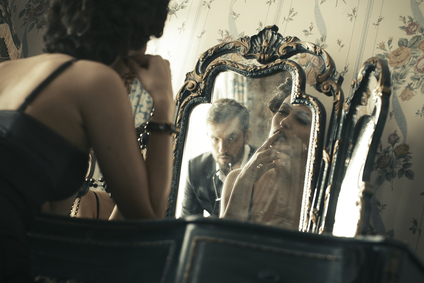 Yesterday, a Facebook colleague posted a link to a Huff Post article that left me floored. Entitled “My Naked Truth,” writer Robin Korth discusses a recent relationship in which the man she was seeing, just 4 years shy of her 59 years, told her that he could not deal with her ‘wrinkly body’ and requested that she ‘hide’ in order to continue a sexual relationship. When she informed him that she no longer want to see him, he was both stunned and confused.
I would like to say that I have no words but it’s simply untrue. I have many words, most of which are unprintable. However, the piece provided the courage for me to openly share my recent experience on a dating site. I’ve been mired in work for the past half decade and have been running from the disappointment and hurt from my last relationship; in other words, I’ve not been seeing anyone nor have I had any interest in putting myself back out in the game. But this Spring brought a shift in priorities and in my life and with an open heart and halfway open mind, I decided that the time was now to have fun with a new man.
I have male friends in my life who constantly tell me that I am pretty; some go as far to claim that I am ‘hot,’ or ‘sexy.’ Those compliments are truly lovely. And yet, my foray into the world of online dating only brought to fore everything that is wrong with the way that many men my age consider women and how they consider themselves in relation to the partners they go after. For the most part — like Dave in Robin Korth’s piece — the men that I encountered seem to have blinders on. Mind you, I know a lot of men who are as self-deprecating about their aging looks as women are, but for every single one of these guys, I also know at least two who are clueless. The latter go after women half their age or at the very least, 10 years younger. And while I can certainly understand the attraction of supple skin, perky breasts and flawless, cellulite-free derrieres, I can also see what apparently they don’t see in themselves: sagging guts and receding hairlines. In my recent ‘dating’ foray, I was contacted by countless men who ignored what I wrote that I was seeking, men a good 10 years or more older than me, inactive men, men who, based on their notes, were short a few neurons in the intellect department. I received emails saying little more than how much my hair and eyes were appreciated. For all intents and purposes, I was rewarded with superficial, icing but no cake, whipped cream and nothing more. Needless to say, I promptly took down the profile.
When does the double-standard start and end? We live in a country where there are weekly reports of high school or college athletes raping women, where insurance companies pay for men with erectile issues to get their hard(s)-on, where a women turns 50 and becomes invisible and where men of the very same age, men with big guts and lousy postures who get winded walking up a few stairs somehow become more attractive — at least to the few who, in the majority of cases, are only interested in their money and cache. Or, as Korth writes, men can’t deal with our bodies unless we are in the dark draped in protective gear that sucks in our flaws and also our souls in the process.
So, floored? Yes, and angry and absolutely puzzled how this happens and why many women continue to lead their lives counting wrinkles and flaws and opportunities that have dried up. And I am heartened by women like Korth who are willing to share their stories and still claim their bodies for what they are: wrinkled but beautiful, flawed but strong, every “imperfection a badge of living and giving of life.”
Here’s the rub, my rub: I liked the way I looked a lot better six years ago and was hardly as self critical as I am now. And, at the age of 53, I find lots of flaws; this despite working out daily and engaging in other physical activity. Time to end the double-standard. I think I’ll start right now. What about you?
Read More
Aging parents, aging us

Do different generations stay different? Do we replicate the patterns of our parents, or do we make different choices?
Like many people my age, I have aging parents. In my case, that’s a mom approaching her 90s with some medical challenges and the difficult adjustment of living alone for the first time in her adult life. It’s a struggle, and I think it has forced her and her two sons to face up to some uncomfortable truths over the last few years, particularly since my dad died in the summer of 2012.
One of those: how I will confront the inevitabilities of old age (if I am fortunate enough to get there). For my parents’ generation, it was common for parents to be taken care of by one or more of their children, either in the family home or by moving into a child’s home. There was (is?) a stigma about nursing homes and retirement homes. My mother has chosen to stick it out as long as is possible in her home, the home she was born in. But unlike her parents, she doesn’t have a child who will “take care of her.” I live a 90-minute flight away, my brother is six hours away by car. Thanks to my father’s service in the Second World War, she receives a number of services that have allowed her to stay in her house — the house her grandfather bought and had moved onto the property before the Great Depression — despite the encroachments of age on her body.
For people in my generation, the rules are a bit different. I have no children to rely on. I expect that any support that my partner or I will need as we age won’t be provided by family members, but by paying people from our retirement savings and investments. While I love our house, I think that when the time comes for us to retire I’ll be able to sell it and leave with no great emotional wrench; including our house, I’ve lived in about seven different places in my adult life, and I think I’ll be able to move again.
But things have been different for my generation for a while. Here I am, typing this in a pair of jeans and a t-shirt with a graphic representation of Stephen King’s “Dark Tower” series. I never saw my dad with a pair jeans (what he would call dungarees) on or a t-shirt in my lifetime. My partner doesn’t wear housecoats like my mom does, or consider the maintenance of an immaculate home a key goal, as her mom and mine do. She works outside the home, while my mom gave up her job as a nurse in ’53, when she married, and never collected another paycheque.
We are — or at least I think we seem — “younger” than our parents at the same age. We go to concerts by loud bands, we dress differently, we participate in different recreational and sporting activities, we expect that our lives will be characterized by being and acting young for a long, long time. Thinking of Shakespeare’s seven ages, we’re unwilling to enter the fifth age, of justice and solemnity. We want to be lovers and soldiers forever.
So when we age, will we really be different from our parents? Will our expectations be different; will we make different choices? Or am I flattering myself by thinking that I’ll make other choices, better choices?
It’s easy to tell yourself that you know better than the “old folks.” But those better decisions and more logical choices are much easier to make in the world of the distant future than in the world of the cold present.
It seems to me that the real challenge for us all is to strike the constantly shifting balance between independence and dependence, between insulating our elders from danger and allowing them to live as they choose, between being determined and being bullheaded, between giving in and denying reality, between taking responsibility for our health and accepting support when offered. There’s no magic formula, no easy answer.
(photo: cc-licenced by Flickr user Lars Ploughmann)
Read MoreGuyside: Dealing with aging parents, guyside style.
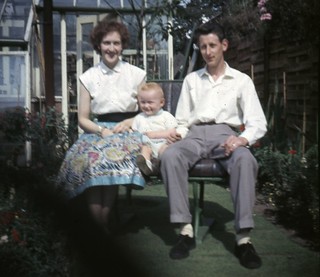
As parents age, we have to move from being “their child” to mutual independence to their dependence on us. It’s not always easy.
One of the things about getting to this age (in my case, 47) is that you get the odd experience of parenting your parents.
I was about the last child in my generation. With both parents near the end of large families, I have a ton of cousins, many of whom are well into retirement by now. And as a late child (born to 41-year-olds), my mom (and my dad, until his death in 2012) is well into seniorhood.
It’s probably no surprise that the dynamics change when your parents age. As a child, we strive for independence from our parents. That lasts for some time and then, like a wave collapsing in on itself and running back into the ocean, dependence begins to reach back out from your parents to you.
Things that were easily done for years become more difficult. It becomes more challenging for the senior citizen to take on some of the frustrations of daily living. And if physical illnesses encroach, as they almost certainly will, that process can accelerate more and more as time goes on.
So here, from my own experience and with the help of some references I’ve found, are some tips for dealing with aging parents:
- Find ways to detach emotionally just a bit. It’s difficult to hear a parent in emotional or health difficulty. But if your emotions take over, it’s going to be difficult to truly help them. Create an outlet for your emotions, but then work on logic.
- Sometimes just listening is enough. As a guy, I know only too well I can jump to SOLVING THE PROBLEM. But sometimes, your parent won’t want a solution; they’ll want a set of ears.
- Talk to your parent or parents about power of attorney. There are times at which you may need to intercede. It’s easier to do that if you have arranged things in advance.
- Support anything your parents are interested in doing that will help their physical, emotional, or mental health. Got a 97-year-old (like my aunt) who loves to swim? Make sure he or she gets to the pool. Is someone a bridge player? Find them a club. Often, seniors lose friends and family members as they age, so new social links are important.
- Build relationships with their health care providers. As seniors age, it’s more likely they’ll have serious health concerns crop up. And seniors are more likely to have a more deferential attitude toward doctors and medical professionals than younger people. So it’s important that you be able to play a role in their health care. This doesn’t mean taking over; it can mean being a trusted resource, an advocate, or maybe just a drive to an appointment.
Who are you wearing?

Labels. Our world’s full of them. And they are no more pervasive than when applied to women, particularly as we age and start to become invisible, not only to others but also to ourselves. In fact, I am becoming acutely aware that some of these labels have slipped into my vocabulary.
That’s why I’m beginning to more fully appreciate the move that Prince made years ago when he changed his name to a symbol and became “the artist formerly known as…”Granted, one can argue that it was a publicity move of epic proportions and it sure did garner a lot of attention. But at the same time, it also shifted control. Perhaps he became himself again.
On the brink of a major change, I am once again challenging myself to step outside the comfort zone that labels provide and consider if I am not one of the following, who am I?
- a middle-aged woman
- a Cougar
- menopausal
- a woman ‘of a certain age’
- an old maid?
Better yet? Who are you? Have you, like me, allowed yourself to slip into these labels like a comfortable pair of socks?
Our generation of women came of age on the tails of Gloria Steinem, Shirley Chisolm, Ann Richards and Bella Abzug, women who not only reinforced the message that we should live within our skins but, that we should do so proudly. And yet, many of us have shed that pride and as I wrote a few years back, have somehow stopped wearing ourselves, as if we’ve somehow crossed into the wardrobe of no return, where invisibility is safer than rebellion.
I’m certainly not going to start burning my bras or marching in Washington for older women’s rights (see, there I go again). But I am going to make damn sure that as I cross the threshold of a new home, I start wearing myself again.
What about you? Who are you wearing?
Read MoreArchives
Tags

This work is licensed under a Creative Commons Attribution-NonCommercial-NoDerivs 3.0 Unported License.