


Newsflash: For better health, accentuate the positive!



Inflammation. It’s our bodies’ revenge in response to daily habits and exposure to stressors. Left unchecked, an increase in inflammatory markers in the bloodstream significantly increases the risk for chronic diseases and death. Increasingly, researchers are pointing to psychological distress — factors like hostility and depression — as playing a key role in inflammation. Yet, there is a silver lining to this story: positivity. In fact, Penn State researchers are reporting that they have found evidence supporting an association between mental wellbeing (e.g. positive social relationships, purpose in life and positive emotions) and lower levels of inflammation throughout the body.
Until now, most of the research in this area have relied on measures that don’t necessarily fully reflect emotional and stress in daily life. But these daily stressors are important and appear to affect physical functioning in the short term and over time, accumulate to wreak havoc on our health. Research has also fallen short when it comes to the benefits of minor positive events — called uplifts — that occur during daily; examples include dining with a friend, sharing a good laugh or taking a leisurely walk.
Yet, new study findings show that experiencing daily positive events at work, at home, within your network and via interactions can lower the levels of inflammatory markers, namely interleukin-6 (IL-6) and C-reactive protein. In women, these daily uplifts appear to also affect the levels of fibrinogen, a blood protein that contributes to clotting. After the researchers took potential factors that might skew the results into account, such as race and income, only IL-6 continued to be significantly and beneficially affected by these daily positive events.
Let’s look at IL-6 for a minute. In certain contexts like exercise or in the face of infection, IL-6 actually has anti-inflammatory properties. Yet, when it comes to psychological stress, IL-6 becomes pro-inflammatory, which is why finding ways to counteract its Dr. Jekyll/Mr. Hyde actions is so important.
Back to positive, daily events. The type that had the most impact were interpersonal positive events, particularly in women. I’ve written previously on the importance of friendships and social support as we grow older and these data help to bolster the evidence supporting this.
What’s lacking here is definitive cause and effect. But an association has been demonstrated and it’s never bad to step back, take stock and accentuate the positive on a daily basis. Not only does that strategy work to help our mental state but it may also help our bodies ward off disease.
Read More
New Year? New You!

Want to know one of the most important resolutions that you can make? Commit to you!
I write about a lot of topics on Flashfree but the overriding theme is health and the importance of taking care of yourself. And no one can do that better than you can, that is, once you make a commitment to become healthier and identify strategies that work best for you. There are four tips that I’d like to offer to help you get over the initial hump.
- Move. I can’t emphasize the importance of physical activity enough. From bone health to heart health to mental health, it is the one accessible, equal opportunity strategy, regardless of income or geography. Because even if you don’t have entry to the gym, you can walk, run, bike, step, or engage in other activities that don’t require a membership or a monthly fee. In addition to counterbalancing the calories that you ingest daily, simply simply engaging in vigorous physical activity, i.e. 7 days of a combination of moderate intensity/intense activities that add up to 3000 MET minutes a week) can significantly decrease menopausal symptoms, in particular fatigue, depression, insomnia and hot flashes. (Activity level is scientifically measured by units known as METs, or metabolic equivalents; vigorous activity is equivalent to 8 METs and moderate activity to 4 METs).
- Be conscious. My grandmother used to say ‘everything in moderation.’ When it comes to diet, I don’t engage or believe in deprivation but I do try to balance out the occasional junk and sweets with healthy, daily doses of vegetables, fresh fruit, lean proteins and fiber. Researchers say that what you eat is extremely important. In a study of over 500 women, the strategy that worked best, leading to an average weight loss of 17 pounds over six months, entailed boosting intake of soluble fiber, fruits, veggies, whole grains and sources of plant stanols/sterols (i.e. almonds, brussel sprouts, wheat germ/bran, peanuts, olive oil and omega-3s). However, they also started moving more and adding regular, moderately intense activity to their daily routines.
- Engage. Want to know the key to health and wellbeing? Your friends. Data from a study published in Psychological Review in 2000 suggests that women’s inherent response to stress is to ‘tend and befriend’ rather than ‘fight or flight;’ in other words, there is a biologically-defined strategy or pattern that involves caring for offspring, joining social groups, and gravitating towards friends under stressful circumstances. This is driven, at least in part, by the release of the hormone oxytocin, which coupled with endogenous opioids and other sex hormones, promotes maternal behavior as an alternative to the male-oriented fight and flee response. Other findings have also shown that friendships help prevent the development of physical impairment and facilitate a more joyful existence. What’s more, having a strong social network can lower blood pressure and heart rate and improve cholesterol levels. The bottom line? Nature has provided us with a built-in prompt to maintain those ever important bonds. Our inherent tendency to nurture completes the picture.
- Laugh. Several years ago, researchers discovered that humor therapy and anticipation of laughing or being amused (also known as mirthful laughter) boosts mood hormones and raises human growth hormone (which optimizes immunity levels. Mirthful laughter has been shown to lower stress hormones and improve the functioning of certain cells – natural killer cells – that favour immune function. Daily laughter also helps lower cholesterol, decreases inflammation that contributes to disease and improves overall wellness. A good belly laugh goes an awfully long way. That funny bone? Seek it out.
Scents and sensibility…aromatherapy and your mental health
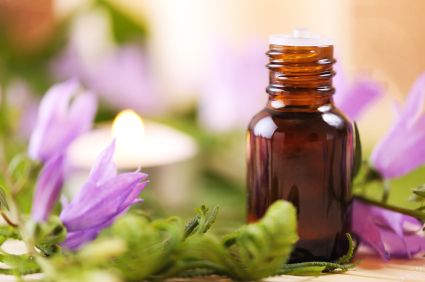 Scents? Or Sensibility? Can aromatherapy boost the psychological benefits of therapeutic massage?
I am a huge proponent of aromatherapy also though I have never been convinced one way or the other of its medicinal value. I simply like good scents; I find that they can energize or relax, boost endorphins or calm nerves. And yet, one thing that I did not realize is that aromatherapy massage is the most widely used complementary therapy in nursing practice — legitimized largely by its role in holistic nursing — and is recognized by the US State Boards of Nursing. There are data that suggest that aromatherapy may help improve anxiety, depression and mood swings, which is interesting since mood swings and depression are common among some women going through menopause. And, massage has been reported to be helpful in ameliorating certain symptoms, including insomnia.
So, what exactly is aromatherapy?
Aromatherapy refers to the use of essential oils, extracts if you will, that are distilled from roots, seeds, leaves or blossoms of plants to promote physical healing or enhance overall wellbeing. The practice has been used for roughly 6,000 for therapeutic purposes. While experts are not certain how aromatherapy works, some believe that it works through smell receptors in the nose that communicate directly with the brain.
Currently, researchers are reporting that when added to therapeutic massage in menopausal women, it may help to reduce the burden of psychological symptoms. In fact, when they compared the effects of twice weekly, 30 minute aromatherapy massage sessions to the same type of massage but an odorless oil and to no intervention at all, that is exactly what they found.
For the purpose of this four week study, researchers used an oil that consisted of safely diluted proportions (4:2:2:1 ratio, respectively) of:
- lavender — known for its sedative properties and ability to promote calm
- geranium — commonly used for menopause
- rose — useful for reducing stress and targeting menopause and related hormonal issues
- rosemary — known to improve circulation and exhaustion
Evening primrose oil — an oil that is often used as a carrier (pressed rather than distilled) oil to enhance the effects of the essential oils.
A certified midwife (who also held a massage and aromatherapy certification) conducted the massages at the same time daily; oil was applied with hands using clockwise circular movements with light pressure and the participants lay face down. And, the researchers used two scientific measures both at the study’s start and end to evaluation depressed mood, irritability, anxiety, physical/mental exhaustion and impairments in memory and concentration. To reduce bias, face to face interviews were carried out rather than relying on recall and self administered questionnaire.
The findings? Both aromatherapy therapeutic massage and regular therapeutic massage appeared to have positive effects on psychological symptoms. However, somewhat higher average reductions in severity scores were seen in women who had the aromatherapy massage. And compared to women who didn’t receive any treatment whatsoever, aromatherapy massage had significant effects on depression, irritability, anxiety and physical and mental exhaustion.
It’s virtually impossible to tease out the emotional benefits alone of having massage or aromatherapy massage; being touched warmly and gently tends to boost overall wellbeing. However, from a scientific standpoint, aromatherapy massage therapy in a controlled environment appears to boost the effects of regular massage.
Yesterday, I put this theory to test. I felt a heck of a lot better but not necessarily due to the scents. I’m opting for sensibility on this one. Meanwhile, what are your thoughts on aromatherapy?
Read MoreIs a spa retreat the key to your soul’s estate?
(S)he enjoys true leisure who has time to improve his soul’s estate. – Henry David Thoreau
If you are anything like me, you’ve worked yourself to the nth degree and are in need of rejuvenation. After all, your soul’s estate is only as valuable as its upkeep, right? However, is there any proven benefits to a spa retreat beyond that incredible boost of endorphins that feed an overall sense of wellbeing?
Evidently, there really is! In fact, contrary to what many believe, newly-published research in Integrative Medicine suggests that the combination of caloric restriction, colonic therapy, meditation and yoga may provide the body with actual physiological benefits beyond the feeling of wellness. Mind you, certain practices like caloric restriction can be downright dangerous if not effectively carried out, reducing much needed vitamins and minerals, resulting in a loss of lean body mass and even taxing the heart. Colonic hydrotherapy, i.e. removing toxins from the intestines, has likewise been questioned, namely because there are few data to support claims of therapeutic benefit and without proper guidance, may result in nausea, vomiting, dehydration and electrolyte imbalance.
However, in this very small study of 15 healthy women and men, a one-week, intensive spa program that focused on three main areas – calories, toxins and stress management — yielded some surprising results. Roughly three to four days before a week at the spa, the participants switched out their normal eating habits for fruit, raw and steamed veggies, salads, juices and herbal teas, 2 tablespoon of olive oil at bedtime, 8 oz of prune juice every morning and laxative teas at night. They were also asked to avoid potatoes, bananas, all grains, pasta, meat, dairy, processed foods, caffeine and alcohol.
At the spa, all received at least four colonic treatments and did 800 calorie juice-fast cleanses (all herbal teas, veg/fruit juices, probiotics, digestive enzymes, herbal laxatives, olive oil, vegetarian liquid protein supplements, vegetarian soup and water with lemon). They also participated in daily structured meditation and yoga programs as well as personal meditation to boost deep breathing, heightened awareness and calm.
The findings? Clearly, all participants dropped weight, which is to be well expected from caloric restriction; this weight loss averaged about 7 pounds. Likewise, there was expected decrease in blood pressure. Blood fat levels, namely total cholesterol, also benefitted, and levels of mercury declined in some participants, which supports the hypothesis that this type of program can help clear the body of certain toxins. Not surprisingly, the researchers also noted a significant decrease in stress, depression and anxiety and saw improvements in anger levels, tension and fatigue. Spirituality scores also improved, probably as a result of meditation and the group appeared to be more intensely unified than before the spa visit.
Researchers say that while the study is quite small, it appears that intensive spa programs may have some real benefits. One thing to note is that the participants experienced changes in sodium and chloride levels. This indicates that some of these interventions do affect electrolyte levels and therefore, can be risky in people who are predisposed to imbalances or on certain medications like diuretics. The researchers also recommend that before participating in ‘extreme spa,’ that you have a complete physical to insure that your body is up to the task.
Extreme spa or gentle spa that focuses on health, balance and internal (re)connection. All may hold the key to estate management. Your soul will thank you!
Read MoreTo Life: Friendships
L’Chaim. To life!

Several years ago, my mother shared a story about a dear friend’s mother dying the day before the friend’s daughter was getting married. In Judaism, those who pass are typically buried with 24 hours. This is dictated by the Torah. Kabbalah teachings also suggest that immediate burial brings closure to the soul in terms of its relationship to the physical body, thereby allowing it to pass over. In this particular situation, the rabbi told my mother’s friend to have the wedding first, and then the funeral.
Life before death.
Although my mother told me this story within another context, I relate it to connections and their growing importance in our lives as we age.
Data from a study published in Psychological Review in 2000 suggests that women’s inherent response to stress is to ‘tend and befriend’ rather than ‘fight or flight;’ in other words, there is a biologically-defined strategy or pattern that involves caring for offspring, joining social groups, and gravitating towards friends under stressful circumstances. This is driven, at least in part, by the release of the hormone oxytocin, which coupled with endogenous opioids and other sex hormones, promotes maternal behavior as an alternative to the male-oriented fight and flee response.
Findings from the Nurses Health Study have also shown that friendships help prevent the development of physical impairment and facilitate a more joyful existence. What’s more, having a strong social network can lower blood pressure and heart rate and improve cholesterol levels.
Our community is ever more important as we begin to lose family members to illness, our children begin their own journeys and our hormones start to wreak havoc on our bodies and our minds. Nature has provided us with a built-in prompt to maintain those ever important bonds. Our inherent tendency to nurture completes the picture.
It appears that as women, we possess the strongest alternative strategy to aging in existence. Our friends.
L’chaim.
Read MoreArchives
Tags

This work is licensed under a Creative Commons Attribution-NonCommercial-NoDerivs 3.0 Unported License.