


Vaginal Atrophy: Is there an effective non-hormonal option?


While the GLAM squad works to convince you that the only sensible option to treat vaginal atrophy is Novo Nordisk’s Vagifem (a topical estrogen agent), I would like to share that a highly effective non-hormonal option exists. The rub? It’s only available in Europe and Canada. The thing is, I have tried it and while I may be an n of 1 in scientific circles, I want to share that it’s pretty darn amazing.
Before I do the reveal, I would like to get a bit personal and share my story. After years of experiencing no issues with vaginal dryness or pain during intercourse, the tables turned this past Summer. And so, I did the most sensible thing that I could do (short of reading Flashfree!); I made an appointment with my gynecologist. And after a thorough examination and a few tests for infections, she recommended that I try Estrace, another topical estrogen in the same category as Vagifem.
If you are a long time reader of Flashfree, you are well aware of how I personally feel about hormones. However, what I’ve not shared on this blog is that I have always had an extreme sensitivity to hormones, a sensitivity that I discovered in my early 20s when I started using the pill. That, coupled with the fact that my mother had breast cancer at an extremely early age made me wary of any type of hormone. And years later, when I started this blog and read all the data I could get my hands on, I was convinced that hormones were not a good route, regardless of their efficacy in addressing menopausal symptoms. Yet, regrettably I chanced it…again.
I want to emphasize that my experience is only mine and is not necessarily reflective of others’. However, within a month of using Estrace, I gained 6 pounds, was bloated, developed severe acne, had daily headaches, and experienced significant and irrational irritability. But damn, my vaginal tissues were once again moist.
Not. Good. Enough.
And so, I started researching my options. And stumbled across Gynatrof. 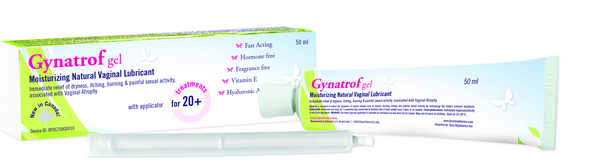
Gynatrof gel is a natural topical agent comprised of microscopic beads (known as liposomes) are formulated to act as both a lubricant and a moisturizer. This technology helps to insure that the vaginal tissues remain moist between applications, and additionally, boosts hydration and elasticity. The gel contains several ingredients:
- Hyaluronic acid, a type of molecule found abundantly throughout the body’s connective tissue, the skin and the nervous tissues. Hyaluronic acid has the ability to store large quantities of water, thereby forming a natural, moisturizing liquid film when applied topically. More specifically, it helps to protect the vaginal skin from irritation and redness, itching and burning; enhances natural lubrication and may even help to aid healing of irritated vaginal tissue.
- Hops plant extract, which has weak estrogenic effects and may help promote lubrication and elasticity. Hops have also been shown to possess antibacterial properties and are sometimes used for leg ulcers.
- Vitamin E, which the manufacturer says reduces inflammation and prevents aging of the vaginal area. If anything, vitamin E is believed to be an antioxidant that may help prevent or treat disease. It has also been used for centuries to treat the skin and has been shown to penetrate both the outer and next layer of the skin (epidermis, dermis, respectively).
Available in Europe since 2006, Gynatrof has proven safe and there have been no reports of estrogen-related sensitivity. It is also non-toxic should it be accidentally ingested.
My personal experience? I have been using Gynatrof for a month now. And I have had stellar results – no side effects, no sensitivity and no issues during intercourse.
As someone who regularly colors outside the lines, it’s no surprise that I was able to obtain Gynatrof. But more importantly, when I contacted a local compounding pharmacy to see if they could obtain it for me, they called back after several hours to inform me that they could not.
This is an OTC product in both Europe and in Canada. It has been on the market for eight years now. And yet, we do not have access to it in this country. Moreover, it works, at least for me. And it is a safe option for women who either cannot tolerate hormones or choose not to use them.
Anyone interested in starting a petition? I cannot endorse this product enough.
[Disclosure: I neither contacted the manufacturer or its representatives nor did either contact me to review Gynatrof. It worked so well for me that I wanted to share it with my readers]
Read More
Guyside: Girls deserve more than one way to wear a bow.

Robin Hood by Rich Becker.
With the abundance of bow savvy heroines making a mark on the silver screen, it wasn’t any surprise for me to see my daughter don a hood and fill a quiver for Halloween. What was a surprise, however, was how almost every neighbor narrowed their errant guesses to the confines of gender.
“Who are you … Katniss?”
“No.”
“Merida?”
“No.”
“Tauriel from the Hobbit or Susan from the The Chronicles Of Narnia?”
“No and no,” she said. “I’m Robin Hood.”
She said it with enough conviction to corral the conversation. She was Robin Hood and the only person who questioned her about being a girl was a 5-year-old boy. Once she reassured him that a girl could be Robin Hood, he turned his attention to her bow and arrows. Next year, he said in wide-eyed wonder, he would be Robin Hood.
Next year, she said, she would like to be a princess like she was two years ago too. The only bow she sported back then was a yellow one to tie her hair back. But the year before that she was a pirate. And the year before that, she was a wood fairy in the vein of Tinkerbell. There are no limits to her imagination, especially those related to gender.
It’s part of a trait I hope she retains all her adult life too — the art of being gender ambidextrous, whereby every decision she makes is made based on passion and aptitude over the societal shakedowns over being feminine and a feminist. Life is complicated enough without trying to conform to a stereotype or work even harder to avoid one.
It seems to me that there is something inherently wrong when our daughters think that they have to ask permission whether or not they can dress up like Han Solo for Halloween. And while the girl who asked was very fortunate to have Tom Burns (who dressed up as Princess Leia) as a dad, it still haunts me that any 7-year-old girl would be so cognizant of gender-flipping costumes.
It’s almost worrisome as the growing number of parents who think the princess syndrome needs to be cured in seconds. It doesn’t.
Kids aren’t really part of the good role model/bad role model debate unless they are indoctrinated by the people who invented it. Sure, some stories might carry moral messages but none of the princesses really auditioned for the role model moniker (and neither did their princely counterparts, who suffer all sorts of severe character flaws).
The far greater danger is to perpetuate the myth that feminine and feminism have to somehow exist as polar opposites. They don’t. If the operative word is choice, then let girls make their own.
My daughter feels equally comfortable in a sundress or her fast-pitch softball uniform, which is usually covered in dirt five minutes before the warmups are over. She has an appreciation for art and music as much as for engineering and science. She is just as likely to play with Hot Wheels as Barbies, but is no more inclined to wish for wheels instead of feet than she is for that impossible waistline. She enjoys dodgeball as much as Girl Scouts and, on any given day, can show off a pirouette or hold a plank position.
It’s a freedom that I hope she preserves all her life, not as someone who is gender ambiguous but rather gender ambidextrous. Women should never feel forced to give up a stitch of gender identity to achieve equality. On the contrary, it will be my daughter’s ability to embrace her gender without being made a slave to it that will eventually empower her generation to move beyond the idiocy exhibited at companies like Zillow or Uber.
Robin Hood, after all, didn’t ask the poor to fix the inequality of his era. He wanted the rich to change their behavior.
Read MoreCan you massage your way to sleep?
 Insomnia! Yes, folks, it’s that time of the year when I raise the sleep issue. In fact, if I could, I would see your zzz’s and raise you a few. You see, I’ve not been sleeping much as of late and I’m desperately seeking a sheep or two to carry me deeply through the night.
What happens to us as we age that interrupts the sleep cycle? In addition to stress and other environmental factors (which I’ve covered quite frequently on Flashfree), a progressive decline in estrogen and loss of ovarian function can strongly affect sleep. However, experts say that despite the pervasiveness of sleep issues among peri- and post-menopausal women, insomnia is not always adequately discussed or diagnosed by health practitioners. Hence, it behooves women to lead the communication charge when sleep disorders arise or start to affect daily life.
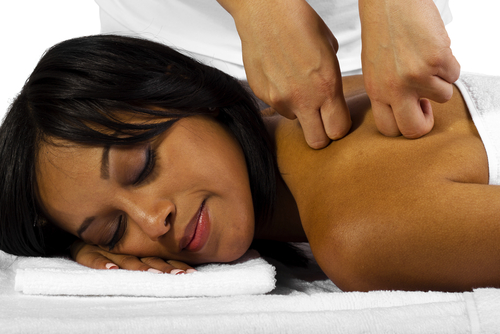
If you would prefer to avoid the hormone route (which, at the very least, may address the issue of menopausal symptoms and sleep disruption), massage might be a good starting point. While some practitioners questions its therapeutic value from a scientific standpoint, massage is known to positively activate blood flow in the lymphatic system (whose primary role is to rid the body of toxins, waste and other unwanted materials), as well as in the connective tissue and muscles. Studies have also shown that massage helps trigger neurochemical reactions in the body, including relaxation, decreased heart rate and breathing and restoration of balance. With regard to menopause specifically, there are some data that suggest that therapeutic massage decreases self-reported insomnia and improve deep sleep cycles. In a similar study, this time with a comparison group, researchers likewise found declines in insomnia and related improvement in life quality. Not surprisingly, in both of these studies, women also reported experiencing improvements in mood.
So, can you massage your way to sleep? While cause and effect remain unproven, the benefits of massage well outweigh the lack of benefits. I don’t know a single person who have not felt better after a massage. Me? I may need to book some me time for a deep rub.
Read More
GUYSIDE: salty talk about your diet
 I’ve been keeping an eye on my blood pressure these days. With a family history of hypertension, it just makes sense. And so far, my results are good. A while ago, I stopped at a local pharmacy and used their automated machine and saw a couple of readings heading into the high range. But more accurate readings have put it further down in the normal range, so that’s good.
But when I looked at my profile for hypertension risk factors, I was struck that there wasn’t a great deal I could do. The major risk factors for hypertension, according to the Mayo Clinic, are:
- Age. (Hypertension is more common in men around 45 or so, and becomes more common in women around 65)
- Race. (High blood pressure is particularly common among blacks)
- Family history.
- Being overweight or obese.
- Not being physically active.
- Using tobacco.
- Too much salt (sodium) in your diet.
- Too little potassium in your diet.
- Too little vitamin D in your diet.
- Drinking too much alcohol.
- Stress.
I do pretty well on most of these. But of the ones I can control, the one about sodium sticks out. As a man and a lover of food that I KNOW is bad for me, I know that I can be the author of my own hypertensive misfortune. Burgers, fries, onion rings, chicken wings — it would be foolish to pretend they don’t have a lot of sodium in there. But there are a ton of foods out there that you wouldn’t expect to have high sodium levels.
We often have pizzas on naan bread for a quick and easy weekday meal. On top, prosciutto, pears, brie, and basil. I knew the prosciutto would be high in sodium — after all, it’s a cured meat. But the naan bread itself has a surprising amount of sodium. Between those two ingredients, one naan pizza is likely delivering more than half my daily allowance of sodium.
Chicken breasts can be injected with brine during processing, increasing their sodium content drastically. A slice of process cheese might have 20% of your daily allowance of sodium!
If you have french fries, you expect them to be salty. But if you add a tablespoon or two of ketchup, you’re looking at 400 mg of sodium just in that!
And none of this counts restaurant or takeout food, which can be extremely high in sodium. You can see just how easy it would be to end up with more than your roughly 2,500 mg of sodium per day:
- 350 mg: a bowl of Raisin Bran.
- 870 mg: a bagel and cream cheese
- 1220 mg breakfast
- 1600 mg: 100 grams of deli ham on white bread with mustard.
- 1600 mg lunch
- 393 mg: baked chicken breast
- 418 mg: baked potato
- 460 mg: cup of canned peas
- 1271 mg supper
- 744 mg: 1/2 cup of salsa
- 420 mg: 24 tortilla chips
- 1164 mg snack
That’s a whopping 5255 mg of sodium, more than twice the recommended amount in a day, without a single shake of your salt shaker, without eating out, and with lots of things that seem healthy at first glance. (Sodium figures from the Fat Secret website)
You can’t change your age, your race, or your family history of hypertension. But if you start to track things like sodium, you do see where you can help prevent hypertension, or if you have it, improve it without resorting to drugs. And that’s a good thing.
(Pretzel photo is a CC-licenced image from Flickr user Jenn Durfey)
Read MoreGet a jump start on those resolutions: eat like a woman
It’s the day after the American Thanksgiving when many of us have indulged beyond the pale, entered food coma land and may even be contemplating another piece of pie for breakfast. Hey, I am all for it! I typically bring the most decadent dish that I can think of; this year it was grits dressing which I refer to as ‘cholesterol’s nightmare!’ Seriously, is there anything better than grits, cheddar cheese, eggs, cream and butter? Throw in a few chives for the nutrition aspect of the dish and voila! HEAVEN!
However, I don’t eat like this daily and I while I do indulge, I try to be mindful of what I’m putting into my mouth. And so, why not take the day after Thanksgiving to get a jump start on your New Year’s resolution?
I wrote this back in May when Staness’ book first came onto my radar but I do believe that it’s worthy of a second go, particularly since it is ‘that time of the year’ when indulgence rules the day. And so, once again, I must thank Staness for her diligent, thorough research and for her words of wisdom.
Consider this: when it comes to science and research, women have long gotten the short of end of the stick. Not only have women been historically excluded from medical research trials, but despite National Institutes of Health regulations mandating the inclusion of women and minorities in studies in order to obtain funding, research on women’s health has continued to lag behind their male counterparts’. Only recently has this issue reared its head again as findings from March, 2014 The Women’s Health Summit demonstrate important disparities in the scientific process that highlight one of the most important issues facing women today:
“When we fail to routinely consider the impact of sex and gender in research, we are leaving women’s health to chance. The evidence on sex differences in major causes of disease and disability in women is mounting, as are the gaps in research.”
Not only are women routinely excluded from research on cardiovascular disease (despite its ranking as the number one killer of women, only 1/3 of clinical trials enroll women and only 1/3 report on sex-specific outcomes), but, women suffer twice as often from depression and yet, fewer than half of laboratory studies utilize female animals to evaluate metabolic differences. And these examples are the tip of the iceberg!
So, it’s no surprise that these gender differences also affect nutrition.
As my friend and menopause colleague Staness Jonekos points out in her new book, Eat Like A Woman (and never diet again): 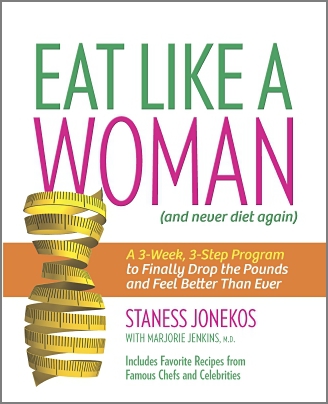
- It takes women’s stomachs an hour longer than men’s to empty after eating.
- For the most part, women have lower energy expenditure than their male counterparts due mostly to differences in body composition; notably, estrogen plays a major role in energy expenditure, appetite and body weight. An imbalance in hormones that are secreted by one gland can affect hormone levels in other glands.
- The thyroid, which Staness refers to as the ‘Metabolism Mama,’ is important for metabolism, energy, grown and development and the nervous system. When it’s out of whack, it can wreak havoc on weight, appetite and even mimic the symptoms of menopause. Moreover, research has demonstrated a direct interaction between estrogen and direct expression of thyroid sensitive genes; what this means is that if you are using hormones to manage your menopausal symptoms, you’ll want to have your thyroid checked.
- Cortisol, which I’ve written about frequently on Flashfree, is another important player. Produced by the adrenal glands,its primary role in the body is to regulate energy (by producing blood sugar or metabolizing carbohydrates, protein and fats) and mobilize it to areas where is it most needed. Research has shown, however, that women have higher cortisol levels than men, and that certain women –especially those with greater amounts of abdominal fat — may be reacting to a large disruption in the release of cortisol that causes a greater than normal difference between morning and evening levels of the hormone. This disruption is believed to be related, at least in part, to exposure to prolonged physical and mental stress. The psychological component is huge, because it tends to trigger the desire to consumption of food that is high in fat and/or sugar, which also tends to promote abdominal weight gain.
- Staness also writes about the role of neurotransmitters, chemicals released by nerve cells that carry messages between the brain and organs. They can affect mood, appetite, sleep, heart rate, appetite and weight, among other functions. Poor dietary habits (low intake of dietary protein, poor carbohydrate choices or minimal omega-3s, for example) coupled with hormonal imbalances and excessive alcohol or caffeine can lead to neurtransmitter imbalances. The bottom line? Hormonal changes may affect the actions of neurotransmitters, which in turn, affect mood and lifestyle choices. Staness further explains that lifestyle habits can affect hormones, thereby affecting neurotransmitters. Think of an endless loop: chronic stress triggers cortisol, causes weight gain, cravings, affecting serotonin levels and thyroid functioning, which then influence metabolism, cholesterol, etc. WOW!
- Women’s digestion is also distinct from a man’s, in that we taste food differently. Staness explains that women are ‘supertasters,’ with varying sensitivities to bitter flavors depending on hormone levels. Women also have a higher risk for irritable bowel syndrome, acid reflux, acid related ulcers and other conditions due to the size of the esophagus, small intestine, colon and rectum.
Staness writes that “there are many confusing messages about what to eat or not eat surrounding us,” and she poses a critical question: “how can one message or one plan apply to everyone? We are all different and yet our basic needs as women are the same.” Toward that end, she offers up a dietary plan that supports women’s health through each life stage and addresses various dietary controversies, ranging from soy to animal protein to salt to caffeine. And, she reintroduces the food pyramid that she says, is one of the biggest factors contributing to the success of her previous book, The Menopause Makeover. Notably, for all you paleo people out there, the ratios that Staness recommends are similar to the average portions consumed by our Stone Age relatives. The key?
- 25% of your calories should come from healthy fats
- 35% of your calories should come from low-fat, lean protein
- 40% of your calories should come from low- to medium-glycemic carbohydrates
Staness’ program is served up in three steps that includes approaches to meals, healthy emotions and exercise. However, she doesn’t stop there; she’s reached out to her favorite celebs and chef for recipes that should please any palate. And if you are seeking even more information, Staness offers additional tools and resources on her website .
What do you get when you combine sound science and nutrition? A plan that makes eating make sense…for women. Isn’t it time to change the paradigm? This seems like an awfully great place to start.
About Staness…
Staness Jonekos is an award-winning television writer, producer, and director, as well as an author and writer on women’s health issues. Her first book, The Menopause Makeover, was a pioneering work in the field of menopause, a highly visual and inspiring survival guide that challenged the conventional, old-style approach to managing menopause. She is a tireless advocate for women’s health, wellness and empowerment. She has appeared on The Today Show, contributes to The Huffington Post, and has been featured in a variety of publications ranging from The Houston Chronicle to More.com. Her co-author, Marjorie Jenkins, MD, FACP is a Professor in the Department of Internal Medicine, Division of Gender-Specific Women’s Health Director and Chief Scientific Officer, Laura W. Bush Institute for Women’s Health Associate Dean for Women in Health and Science. Her motto? “You have to know the difference to make a difference.”
Read More
Guyside: a sad and beautiful world.
From my perch in Canada, the decision in Ferguson felt like a tragedy, or perhaps a series of tragedies.
First and foremost among those tragedies is the death of a young man. In a better world, Michael Brown would still be alive.
Next among the tragedies of this case is the loss of yet more faith in the US court system by the African-American community. If people can’t feel that their judicial system will treat them fairly, then eventually some will find extrajudicial means to mete out justice as they see fit. For us, in the relatively wealthy parts of the Western world, that is a tragedy.
Our world and the culture of violence against women and girls
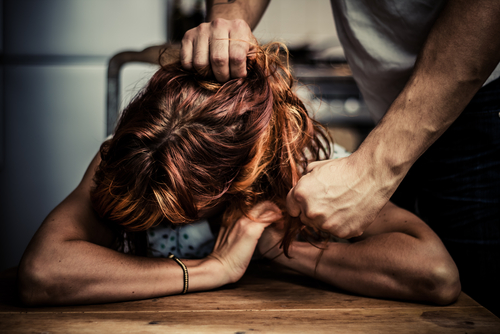
We live in in a world, where efforts to prevent violence against women and girls is inadequate, according to a five-part series published today in The Lancet journal. The statistics are startling:
- Almost a third of women worldwide have experienced either physical or sexual partner violence
- 7% have experienced sexual non-partner violence
- Nearly 70% of girls are married before the age of 18, many against their will
- Up to 140 million women worldwide have undergone female genital mutilation
Here in the U.S., the culture of violence has extended to the internet, where it is seemingly acceptable for men to threaten and coerce women who disagree with them or who try to enter the Men’s Club. If you’ve not heard about #Gamergate or #Celebgate, (or #Ubergate, for that matter) I urge you to dig deeper at challenges pervading wealthier, Western nations. And that’s likely the tip; consider the Cosby debacle or growing reports of sexual assaults on college campuses. Just look at this latest piece on the culture of rape at University of Virginia; the implications are horrible and the code of silence, widespread and misdirected. As the Lancet authors point out, “rape is often a matter of stigma for the victim; violence in the home has been considered a private affair. Turning of the head and closing of eyes have occurred despite [the evidence].”
The Lancet Series suggests that while global attention to violence against women and girls has increased, not enough is being done to prevent the violence from occurring in the first place. Moreover, rigorous data on interventions that work on the prevention front — even in high-income countries — are scarce. Still, the little evidence they have gathered suggest that a multi-pronged strategy is most effective, one that “holistically addresses the individual, interpersonal, community and societal drivers of violence. A key place to start? Correcting gender-power imbalances.
The Series authors write that “women’s and girls’ vulnerability to violence is deeply rooted in the greater power and value that societies afford men and boys in access to material, symbolic and relational resources compared to women.” Moreover, “this gender-based risk is often compounded by other forms of discrimination and inequality based on, for example, race, class, ethnicity, caste, religion, disability, HIV status, migration status, sexual orientation and gender identity, which affect both exposure to violence and the experiences of response.”
Mind you, there has been great strides on the societal level with regard to efforts to change legal and policy norms and recognize this type of gender-driven violence as human rights violation. However, as the authors aptly point out, laws and policies may provide the framework for the unacceptability of violence against women and girls but they are insufficient.
A strategy that has started to take hold is involving men and boys in efforts to stop violence. It is imperative the societal norms that perpetuate gender inequality and violence be reversed and that the role of men and boys as allies in the work to prevent and end violence against women and girls is elevated. Let me be clear: not all men are violent; men who perpetuate or practice violence against women have themselves, often encountered high levels of violence. The use of violence against women is a source of power accorded to men in many settings; take the tech space, for example. And, if cultural norms dictate that “women fall under men’s control, then physical or sexual force and threat are ways to achieve this.”
Still, investment in violence prevention is inadequate. From an economic standpoint and compared to national public expenditure on sports or election campaigning (both of which are estimated in the $3 to $5B range), the U.N. has only benchmarked $100M for investment into violence programs. Yet, the indirect costs are astronomical; the Series emphasizes that women who are exposed to or the victims of violence make greater use of health services than non-abused women, even years after the violence has ended. Violence against women and girls also affects productivity and contribution to social and economic development; the annual costs of intimate violence partner in Western societies ranges from $5.8B in the US (2003 figure) to £22.9B in England and Wales (2004) and $4-5B in Australia. The study Authors also emphasize that while many governments have developed national plans of action to address violence against women and girls, few had dedicated budget lines and domestic spending to support them, despite evidence that points to a strong economic rationale for such policies (for example, the U.S. could save an estimated $23,673 per woman prevented from experiencing violence).
Aside from government allocation of funding and altering societal norms, an important conclusion of the Series is that the healthcare sector has an important role to play in shifting attitudes. Victims are seen regularly in many different health settings and yet programs are not adequately synergized to affect change. By and large, practitioners are taught that their role is to treat disease and related symptoms and many harbor prejudice against involvement in so-called private matters. The authors also say that there is little rationale for distinguishing between preventive programs directed at smoking, drug abuse and healthy eating versus those that raise awareness about the health burden of violence and the broad acceptance of norms that perpetuate it.
“Violence against women and girls is not just another women’s issue, but is a public health and development problem of concern to all.”
There are many ‘Gates in circulation. Daily, we read about another case of online harassment, another case of rape, another threat, another sign of abuse. Not only do we need to reverse the tide; we need to prevent it.
Read More
Archives
Tags

This work is licensed under a Creative Commons Attribution-NonCommercial-NoDerivs 3.0 Unported License.