


Mirror, mirror, on Guyside’s wall…


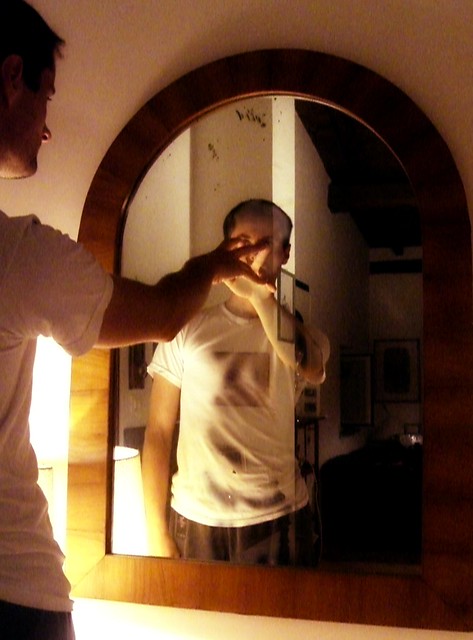 I recently came upon a photo of me that was about 10 years old or so. I didn’t think much of it, but then I took a closer look to see if I could spot the telltale signs of aging in it. It was hard. I’m a little heavier now than I was then (about 192 compared to about 185); there are more than a few gray hairs in my facial hair, but not much on top; I couldn’t see the advance of wrinkles.
Trust me. I am not Dorian Gray. But I think that guys are able to see exactly what they want to see in mirrors or photographs. A classic Canadian folk song called “Lies” is about a woman confronting her face in the mirror, with one couplet: “She shakes off the bitter web she wove / Gently puts the mirror face down by the stove.” From the outside, at least, I think women look at themselves and see flaws, while men look at themselves and see an idealized version of themselves.
I don’t think I have to argue that for many women, body image is a big problem. But I want to argue that the male tendency to ignore reality isn’t an asset. If we “can’t see” the toll that time and our choices take on our body, then men could be opening ourselves up to health issues.
I was recently part of an online discussion where a mother was talking about how quickly her daughter would look at herself and wonder if she was too fat (this in elementary school!), while the girl’s quite-average-shaped younger brother would come to his mother and demand she demonstrate awe at his huge biceps and muscles! While I suspect that everyone in adolescence is hypersensitive to body issues (why don’t my boobs look like hers, why can’t I get rid of these pimples, why am I 6’1″ and weigh under 140 — that last one was me, by the way), it’s disconcerting to think that even in early childhood, there are already seeds of dissatisfaction with who we are, and the willingness to rely on our fantasy vision of ourselves rather than to simply acknowledge reality.
Since the 1980s, when I was thin enough, as my dad used to say, “to have to run around in the shower to get wet,” I’ve put on about 55 pounds. I needed some of that. But maybe not all of that. Even my idealized eyes can see that. I’ll never be a bodybuilder, never be “musclebound.” Given the raw material, I would have to either become an utter gym rat, or I’d end up using dangerous methods like steroids to achieve some level of muscularity. And I’m not willing to risk my health for an image. I like feeling fit, I like feeling toned. But for me, the “Men’s Health” six-pack or the arms of a pro wrestler aren’t worth it.
But the question then becomes: if you recognize the need for change, then how to make that change. Next week, I’ll be talking about cosmetic surgery for men.
(photo CC-licenced by Flickr user Michele di Trani)
Read MoreBalance. I have it. Sometimes.
 In my 20s, I used to work as studio director for a radio morning show. Often, I’d stay up, watch Late Night with David Letterman, and then hit the sack, only to get up and hit the road to be at the station at 5, bright-eyed and bushy-tailed with coffee for the gang. A little later on, I worked at a 24-hour news network, and my shifts were almost always 3 a.m.-11 a.m. or 4 a.m.-noon. I’d come home, do some other work, my partner would come home, and I’d almost always be in bed after 10 p.m. Five hours sleep was fine. In an magazine job, all-nighters were common as we got to production.
If I tried that now, I would implode in a week. And that isn’t always the easiest thing for a man to admit. We’re supposed to be invulnerable, aren’t we? One of the things I’ve noticed as the years have gone on is I can still be as intense as I was in the past (I think!), but that I can’t maintain that level of intensity for same length of time. I attend a music-industry conference each year where part of the deal is attending music sessions that go on until about four in the morning. I can do that, but inevitably there’s a post-conference crash.
Combine the fact that my “energy well” isn’t as deep as it used to be with the lifestyle of a self-employed consultant, where the pace can sometimes oscillate between frenetic and … what now? and you have a recipe for stress.
I have a few things I try to do to combat that stress. I try to keep my sleep habits as regular as I can. I’m lucky in that I rarely have insomnia, so it’s easy for me to stay rested most of the time. That keeps the energy supply high.
If there’s a frenetic period on the horizon, I will try to book downtime to recharge my batteries after the urgency subsides. Better to book it and keep it for myself than to carry on as if I didn’t just complete a herculean task and end up crashing.
And I try to keep my regular appointments sacred. Yoga class, exercise, and the like can sometimes feel like a distraction that I “should” skip “just this once.” But that has an impact down the road. Short-term gain for long-term pain.
It’s not easy to stay energized all the time. But if you can learn — even attempt — to manage yourself a little better, you can perform at a higher level all the time, rather than some roller-coaster cycle of sprinting, and then collapsing.
What are your tips for managing energy levels? Tell me in the comments.
Read MoreGuyside: Dealing with aging parents, guyside style.
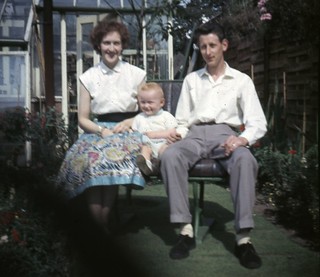
As parents age, we have to move from being “their child” to mutual independence to their dependence on us. It’s not always easy.
One of the things about getting to this age (in my case, 47) is that you get the odd experience of parenting your parents.
I was about the last child in my generation. With both parents near the end of large families, I have a ton of cousins, many of whom are well into retirement by now. And as a late child (born to 41-year-olds), my mom (and my dad, until his death in 2012) is well into seniorhood.
It’s probably no surprise that the dynamics change when your parents age. As a child, we strive for independence from our parents. That lasts for some time and then, like a wave collapsing in on itself and running back into the ocean, dependence begins to reach back out from your parents to you.
Things that were easily done for years become more difficult. It becomes more challenging for the senior citizen to take on some of the frustrations of daily living. And if physical illnesses encroach, as they almost certainly will, that process can accelerate more and more as time goes on.
So here, from my own experience and with the help of some references I’ve found, are some tips for dealing with aging parents:
- Find ways to detach emotionally just a bit. It’s difficult to hear a parent in emotional or health difficulty. But if your emotions take over, it’s going to be difficult to truly help them. Create an outlet for your emotions, but then work on logic.
- Sometimes just listening is enough. As a guy, I know only too well I can jump to SOLVING THE PROBLEM. But sometimes, your parent won’t want a solution; they’ll want a set of ears.
- Talk to your parent or parents about power of attorney. There are times at which you may need to intercede. It’s easier to do that if you have arranged things in advance.
- Support anything your parents are interested in doing that will help their physical, emotional, or mental health. Got a 97-year-old (like my aunt) who loves to swim? Make sure he or she gets to the pool. Is someone a bridge player? Find them a club. Often, seniors lose friends and family members as they age, so new social links are important.
- Build relationships with their health care providers. As seniors age, it’s more likely they’ll have serious health concerns crop up. And seniors are more likely to have a more deferential attitude toward doctors and medical professionals than younger people. So it’s important that you be able to play a role in their health care. This doesn’t mean taking over; it can mean being a trusted resource, an advocate, or maybe just a drive to an appointment.
Guyside: Don’t let winter weigh you down

There may not be a five-mile skating rink like Ottawa’s Rideau Canal in your town. But there are lots of opportunities for physical activity, even when the days are short and temperatures drop.
Where I live, this is the darkest time of the year. Instead of a beautiful sunrise when I wake up, it’s dark. When my partner is walking home from her office, it’s also dark. The layers of clothing get added to. The gloves and the puffy jackets come out of the basement. And the road bike gets brought inside and put on the trainer. Even though the winter solstice in December marks the is a welcome “bottom” to the year, before and after, the days are dark and short and cold.
When I was a kid, winter was the time for snow forts and snowmen and skating in the community rink while Anne Murray tunes scratched over the PA system.
Now, winter is the time of year where I have to shovel the driveway, wear heavy boots that I don’t like, and the time when I can’t ride (I know I could ride, but I’ve never been a winter cyclist type).
When it’s snowy and cold, It’s easy to find that hot new series to watch, to light a fire, pop some popcorn, and wait for spring. It’s just too tempting to simply hibernate in the house over the winter months. And it’s also a terrible idea when it comes to men’s health.
In Canada, studies show that people are nearly twice as likely to participate in any physical activity in summer compared to winter. And if you look at the sporting activities Canadians participate in, only two of the top 10 are winter sports. In Canada, it shouldn’t be surprising to anyone that ice hockey bumps up winter sports participation numbers, and even with the burgeoning popularity of women’s hockey it’s still predominantly male.
And the irony of all this is that when you exercise outdoes in the winter you burn up to 31% more calories than in warmer weather.
So, some tips for guys like me who don’t play hockey or ski for getting out there:
- “There’s no bad weather, just bad clothing” is an a age-old proverb. So if you’re going to invest, invest in good layers of clothing. Go to a store that specializes in outdoor gear for winter so that you can benefit from knowledgeable staff. Fitness magazine has some tips on how to dress for outdoor exercise.
- If you’re a beer-league hockey player, don’t just rely on the hockey to keep you fit. The start-stop nature of hockey can be dangerous for people who don’t have a good base of fitness.
- Some sports — hockey and skiing come to mind — can be pricey to participate in. But skates and snowshoes are cheaper than fully kitting out for playing hockey or going downhill, and walking (with appropriate footwear that will keep you stable) is the cheapest form of all. I live in Ottawa, where for several weeks each year the Rideau Canal turns into a free five-mile skating rink (your hot chocolate will cost you, though). Also, rent before you buy if you aren’t sure if you’re going to stick to a given activity.
- Find a buddy. There will be times when you can’t drag your own sorry butt out for that workout, which is when you need the nagging, cajoling, and potential bribery of a friend to get you going. Use that help, and offer it to your workout buddy.
- If you just can’t stand winter, then bring your sport indoors. My road bike is hooked up to a trainer, so I have the opportunity to ride inside. Other people go to spinning classes to benefit from the motivation of others suffering around them (N.B.: One discovery from spinning — all that sweat that evaporates when you’re riding the bike outside turns into a puddle beneath the bike when you spin. Be warned.)
- Even if you don’t hit the gym in summer, many will offer “winter membership” or monthly memberships.
If your tendency, like mine, is to go to ground when exercising is no longer just a matter of tossing on a t-shirt, shorts, and going, then you, like me, have to just work a little harder to not give in. Besides, drinking that cocoa will feel SO much better if you skated five miles to get it.
Read MoreHave a heart? Move your body!
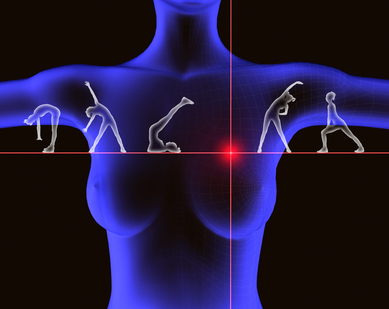
Ladies, listen up! Roughly one third of your life is spent in menopause and thereafter, which is why it’s so important to manage your health appropriately. One of the greatest issues during this time is heart disease, and after menopause, women are exponentially at increased risk for developing cardiovascular conditions compared to their male peers. Although there are numerous reasons for this increased risk, changes in hormones, namely estrogen, can set the wheels in motion, affecting weight, cholesterol levels and in some women, the way that they process sugar in their bloodstream. The bottom line is that as we lose the protective effects of the ovarian hormones, our cardiovascular system is at increased risk. Moreover, one of the most important consequences is the impact on what researchers refer to as ‘autonomic cardiovascular control,’ i.e. heart rate, pressure in the arteries, the ability of the heart to contract properly and the overall ability of the blood vessels to increase the amount of blood that they hold without significantly increasing blood pressure.
Until now, hormone replacement has been the go-to strategy to modify these heart disease risks. Yet, as we all know, the benefits of HRT with regard to heart disease prevention have been challenged and in fact, some studies show an increased rate of stroke and heart events.
The good news is that researchers are now saying that regular physical exercise may be the answer!
It’s a fairly well known fact that physical exercise can improve quality of life and even reduce the risk and/or overall progression of heart disease. One of the ways that it confers its protective effect is the direct impact on autonomic cardiovascular control mentioned earlier in this post. In particular, study findings suggest that regular physical activity may help modulate heart rate and correct the pressure in the arteries (which tends to bounce all over the place as estrogen declines and we age), although for reasons that are unclear, the same benefits are not seen in women who have undergone early menopause.
A common thread found in Flashfree over the years has been to move your body. Aside from weight, wellbeing and perhaps a balancing of vasomotor symptoms, regular exercise may also act as a buffer against physiological changes that occur as estrogen declines and heart disease risk soars.
There’s no time like the present. Get moving!!!!
Read MoreGuyside: Reach for the middle!
It’s easy to reach for the top. We’re almost mandated to do it, right? Nike told us: “You don’t win silver, you lose gold.” Vince Lombardi exhorted: “Winning isn’t everything, it’s the only thing.” Steve Jobs said: “We don’t get a chance to do that many things, and every one should be really excellent. Because this is our life.”
I think men have a particular cultural script that says “more, bigger, better, faster.” It’s powerful. And the tech revolutions of the world have led to startups where the goal seems to be to work harder, pull the allnighters, and generally devote yourself, body and soul, to pursuing your ambition.
Not to say that ambition is bad. But over the last few years, I’ve made decisions — and some decisions have been made for me — that have started to make me think that perhaps we don’t give being average enough credit. Let me tell you a story about a guy who, as a kid, was pretty much the worst sportsman you could imagine.
This guy wasn’t … OK, let’s say it “I wasn’t… much of a skater. Or a baseball player. Basketball? Oh, man. Hopeless. I was pretty tall. But my teenage limbs made me look like a stick insect, and I was about as coordinated as a used-car salesman’s suit. I was pretty much the death of any sporting event I was press-ganged into during phys-ed class. It took me until my thirties to find a sport that I could be passionate about.
I was working at a university about 5 miles from where I lived, and parking there was quite expensive. And, my new house was just a few hundred yards from a network of bike paths. So I bought a used bike from a friend and became a cyclist.
Well, technically, I became a commuter. Becoming a cyclist came later. What I discovered was that I really enjoyed the riding part. There weren’t traffic jams to contend with. I remembered how free and fun it felt to ride a bike when I was a kid. Sometimes, the weather was not so great. And that was anywhere from unpleasant to nasty to… exhilarating. There was a certain joy in pounding your way home in a sudden rainstorm. Once you got to a certain level of wet, it didn’t matter anymore.
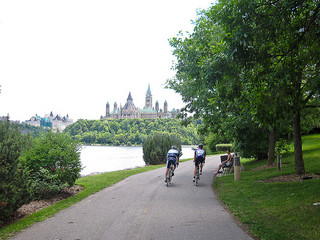
Ottawa is a great cycling city. If you’re slow enough, you can really enjoy it.
That first commuter bike died a sad death when its frame broke, a mortal injury. So I got another one. Then I heard about a local cycling club’s “Rideau Lakes Cycle Tour,” and decided to try training for a two-day, 230-mile ride.
I put on spandex for the first time. Then I went outside wearing it for the first time. I went from the upright-position hybrid bike to my first road bike. I took a group riding course from my local cycling club and started going out on the weekends to ride. I bought clipless pedals and learned how to ride while bolted to my bike. Commutes became kickoffs to longer early-morning or afternoon rides.
I got to the point that when I went home to visit my family, I found someone who would loan me a bike, got my dad to drive me to the bike, then spent the rest of the vacation taking beautiful summer morning rides.
And for the last 10 years or so, cycling’s been my thing. I can ride 30-50 miles without much forethought; the century (100 miles) is a little bit of a challenge, but not like climbing Mount Everest. But all that is not to say that I’m a good cyclist. Hell no. Let me enumerate the ways in which I’m not a good cyclist.
- My iffy fitness regime means that my hill-climbing ability is awful. In the Tour de France, the “King of the Mountains” wears a polka-dot jersey. They oughtta give me prison stripes.
- I’ve never raced. Never felt the thrill of sprinting past the pack and crossing the finish line in a criterium (closed-streets race on a relatively short track). By the time I started riding, the romance of racing was outshouted by the reality of crashing.
- I possess neither the finances to spend thousands of dollars on the most high-tech components possible to reduce the bike’s weight by a few ounces, or the willpower to reduce my weight by a few pounds, both of which would make me faster on the bike.
- My cycling wardrobe tends to jerseys with Sesame Street characters or illustrations of hamburgers on them, rather than team kit.
- I might go a week without a long ride. Sometimes two.
- In Ottawa, the snow begins in November and the roads clear in March or April. My indoor training regimen is … spasmodic at best.
That’s just a start. And you know what? I don’t care.
One of the things I’ve come to learn is that I don’t mind being a bad cyclist. There’s something to be said for riding slow, and for accepting that the young turk on the $7,000 bike (yeah, that’s not even the top of the top-range) is going to smoke me going up or down the hills of Gatineau Park.
I enjoy going 15 miles an hour as much as I would going 25. I enjoy the feelings of cycling, either alone or with friends, and I enjoy the sensations. Dedicating my life to becoming a top-notch cyclist wouldn’t make me enjoy it more. In fact, it might reduce my enjoyment.
Life is full of things we have to do: obligations. At least mine is. I don’t need to turn a thing I love into another one of those obligations. There’s a joy to being okay at something. And if you’re pushing yourself in one or more aspects of your life, maybe there ought to be room in your life for something you’re … just okay at.
I have tons of friends who are marathoners, triathletes, hockey players, basketballers, and the like. I regularly applaud and admire the ones who are “serious athletes” or “competitors.” But I’m not one of those. And you know what? I’m pretty much okay with that.
Dare to be average. You might just like it.
Photo: Creative Commons licenced by Flickr user Fil.Al, used with permission.
Read More
Archives
Tags

This work is licensed under a Creative Commons Attribution-NonCommercial-NoDerivs 3.0 Unported License.